
How Does Continuous Data Extraction Pipeline Design Using Scraping Help Brands Achieve 10x Faster Insights?
May 13
Introduction
Modern enterprises rely on real-time intelligence to respond to changing market conditions, customer behavior, and platform activity. The demand for continuous information streams has pushed organizations toward smarter extraction frameworks that collect and process external data with minimal delay. Enterprises now prioritize AI-Powered Data Extraction Pipeline Solutions to streamline operations, improve accuracy, and scale collection across changing digital ecosystems.
This is where pipeline-driven web extraction becomes essential. Businesses can automate collection, transformation, and storage while maintaining consistency across large-scale operations. The value of extraction pipelines extends beyond websites. Mobile App Scraping has become equally important for tracking app-based marketplaces, promotions, and user interactions where valuable consumer insights reside.
Combining web and app extraction creates a more complete market intelligence layer. Organizations that implement Continuous Data Extraction Pipeline Design Using Scraping gain the ability to transform raw information into usable analytics in near real time. From product comparisons to inventory tracking, automated pipelines reduce latency and support better decision-making.
Reducing Operational Delays in Rapid Market Tracking
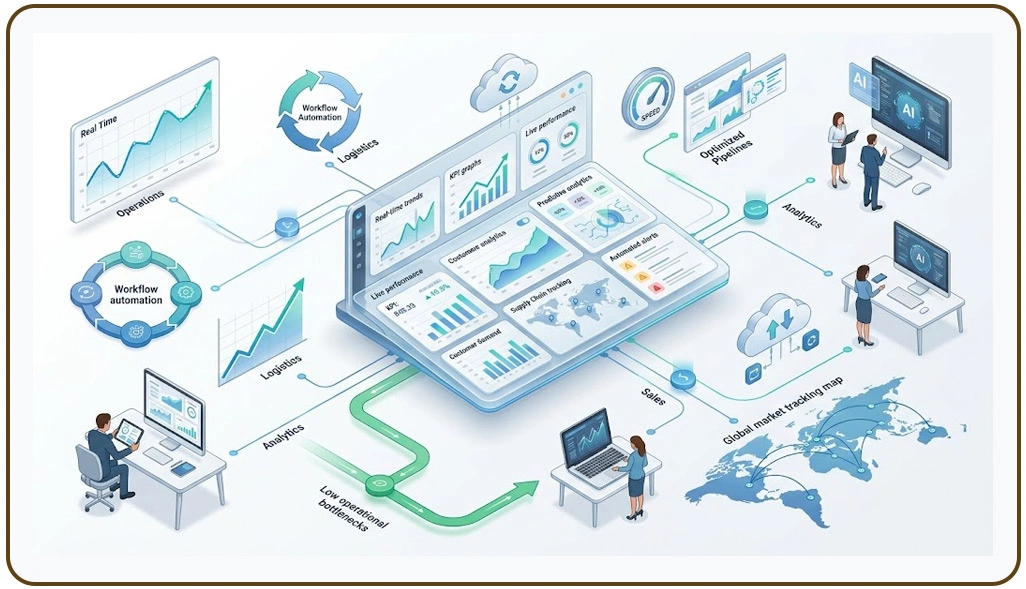
Businesses that depend on external digital signals often struggle with delayed updates from competitors, marketplaces, and inventory systems. Price changes, stock shifts, and promotional campaigns can occur several times a day, yet many internal teams still rely on scheduled reporting. One of the major applications is Competitor Price Monitoring, where brands track pricing patterns across ecommerce stores to adjust promotions and maintain competitiveness.
This process becomes difficult when websites update dynamically and differ by structure. A stronger architecture ensures seamless data flow into analytics platforms. For this reason, companies adopt Data Pipeline Design for Dynamic Website Scraping, enabling structured collection from JavaScript-heavy websites, paginated listings, and protected endpoints. It supports collection accuracy while minimizing interruptions.
| Operational Issue | Traditional Process | Automated Improvement |
|---|---|---|
| Price changes | Manual updates | Continuous capture |
| Inventory tracking | Delayed sync | Live availability |
| Promotion review | Static reports | Automated alerts |
Organizations also integrate mobile scraping to capture marketplace app data, loyalty offers, and consumer behavior beyond websites. This expands market visibility significantly. Automated systems also reduce duplication and improve consistency across product catalogs.
Modern businesses increasingly rely on AI-Powered Data Extraction Pipeline Solutions to automate cleansing, categorization, and storage. These systems reduce lag and convert raw data into structured insights, supporting faster action for sales and pricing teams across highly competitive digital environments.
Addressing Fragmented Consumer Behavior Data Sources

Consumer insights are spread across review sites, forums, social platforms, and online marketplaces. Collecting this information manually often leads to incomplete analysis and delayed strategic decisions. A common use case is Sentiment Analysis, where brands monitor reviews, comments, and product discussions to understand customer preferences.
Continuous extraction ensures fresh consumer opinions reach internal dashboards before trends shift. Businesses address this challenge using Continuous Data Collection From Multiple Websites, allowing unified extraction from multiple digital touchpoints. This supports stronger forecasting, campaign refinement, and customer retention strategies.
| Source Type | Collected Insight | Business Use |
|---|---|---|
| Reviews | Product feedback | Quality improvement |
| Social mentions | Brand perception | Campaign planning |
| Marketplaces | Demand trends | Stock optimization |
Fragmented sources often differ in structure and formatting, making integration difficult. Continuous pipelines standardize incoming records, validate fields, and deliver reliable datasets to analytics platforms. To sustain this process, businesses implement Scalable Proxy Management in Data Extraction Pipelines. Proxy rotation helps maintain uninterrupted collection across large websites, reducing restrictions and access limitations during high-frequency extraction.
Organizations that deploy scalable extraction systems process millions of records daily and generate faster customer intelligence. These frameworks support product planning, service enhancements, and marketing alignment, helping brands respond effectively to real-time consumer behavior.
Scaling Enterprise Intelligence Across Global Platforms

Global enterprises operate across multiple marketplaces, countries, and digital ecosystems. Collecting data from these sources manually often leads to limited visibility and inconsistent reporting. A core strategy for enterprise analysis is Competitive Benchmarking, where organizations compare product availability, service offerings, pricing, and promotions across regions.
This creates stronger market positioning and supports faster decision-making. Businesses improve this process through Best Practices for Continuous Data Extraction, ensuring consistent scheduling, validation, and quality checks throughout collection workflows. Structured systems minimize interruptions and improve dataset reliability.
| Enterprise Need | Common Limitation | Scalable Solution |
|---|---|---|
| Global data access | Regional blocks | Proxy distribution |
| High request volume | Overload | Balanced requests |
| Multi-source insights | Fragmented reports | Unified dashboards |
Scalable frameworks also improve data governance. Automated cleansing and normalization ensure every source delivers usable analytics inputs. This reduces duplication and simplifies cross-market comparisons. Organizations increasingly combine extraction workflows with machine learning to identify trends and forecast competitive changes.
The result is improved operational intelligence and better strategic planning. As digital ecosystems expand, businesses prioritize resilient extraction systems that adapt to new platforms. Robust infrastructures support accurate monitoring, regional tracking, and enterprise analytics at scale. These solutions provide faster insights and help organizations maintain visibility across rapidly changing global markets.
How Web Data Crawler Can Help You?
Modern businesses need consistent data operations to support analytics, pricing, and customer intelligence. By integrating Continuous Data Extraction Pipeline Design Using Scraping, organizations can automate extraction while maintaining speed and reliability across dynamic sources.
- Build custom automated extraction workflows
- Collect structured data from multiple channels
- Monitor changes across large digital sources
- Improve reporting speed with automation
- Standardize collected datasets for analytics
- Scale extraction across regions and platforms
Our engineering solutions focus on flexibility, scalability, and integration. Businesses also benefit from AI-Powered Data Extraction Pipeline Solutions that improve efficiency and reduce operational bottlenecks across high-volume data environments.
Conclusion
Modern digital competition requires rapid access to external information. Organizations adopting Continuous Data Extraction Pipeline Design Using Scraping create faster insight cycles and improve decision accuracy across evolving markets.
Long-term success depends on applying Best Practices for Continuous Data Extraction while maintaining scalable systems that adapt to changing data sources. Connect with Web Data Crawler today to build your custom extraction pipeline and accelerate business intelligence.