


What Does Deliveroo Restaurant Data Scraping Reveal About Menus, Prices, Ratings and Availability?
Sep 18
Introduction
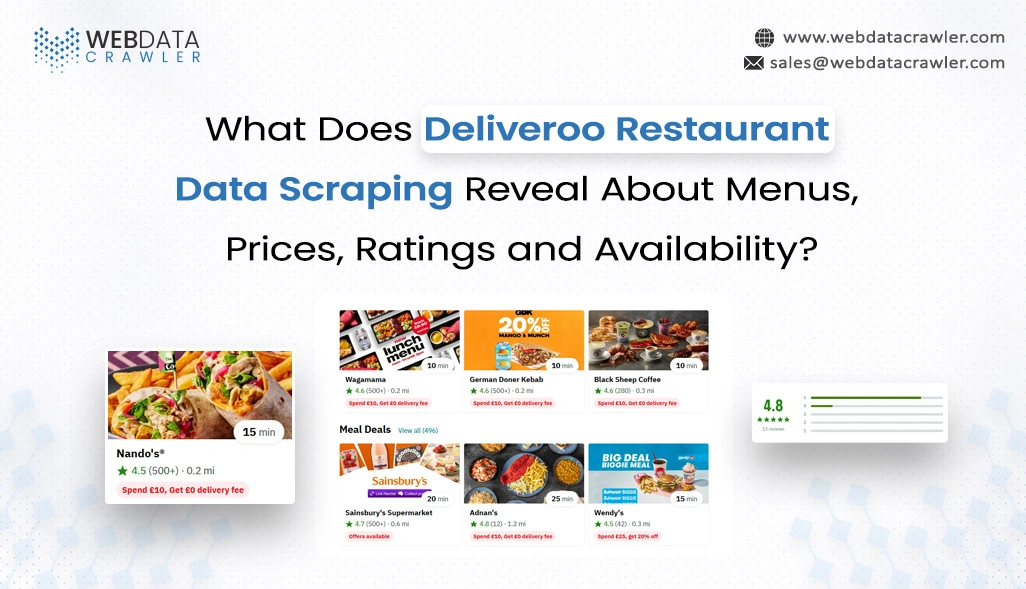
Online food delivery platforms generate detailed signals around restaurant menus, pricing, ratings, availability, cuisines, and customer preferences. Deliveroo Restaurant Data Scraping can organize these publicly visible signals into structured datasets that businesses can analyze for competitive research, pricing studies, and restaurant performance monitoring.
A structured collection process can capture restaurant names, locations, cuisine categories, menu items, prices, ratings, review counts, operating information, and availability indicators. Scrape Deliveroo Restaurant Data for Analysis can also support location-based comparisons and help researchers identify differences across restaurants, cuisines, and markets.
Pricing deserves particular attention because Deliveroo reported that 85% of surveyed customers considered value for money important when selecting a restaurant, while one in three surveyed customers said they had abandoned an order after noticing a price markup. Web Scraping Deliveroo Delivery Data can therefore provide useful inputs for studying price positioning and delivery-market behavior.
Menu Details Shape Restaurant Positioning Across Markets
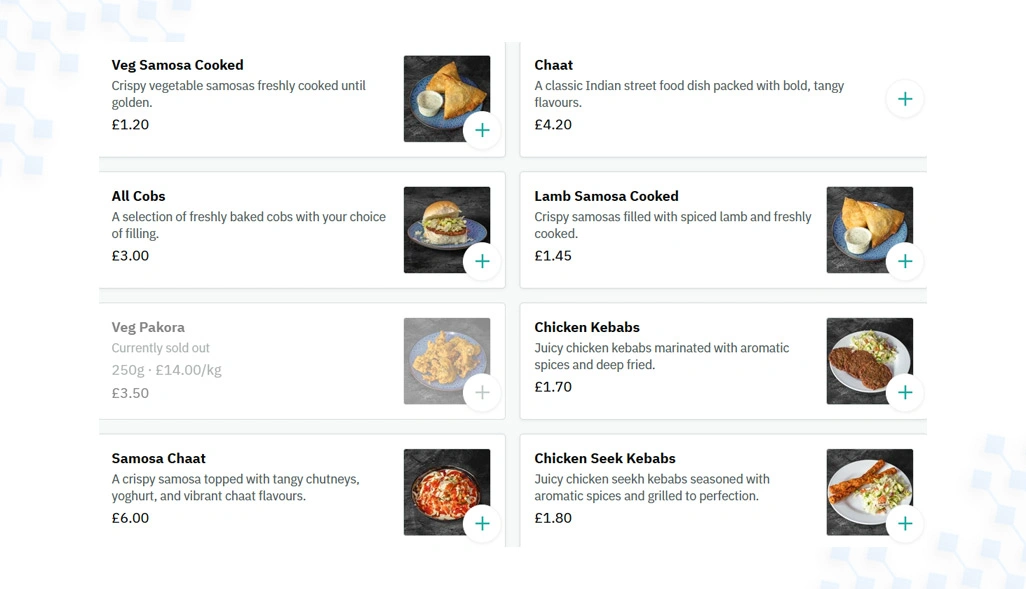
Restaurant menus provide a detailed view of how businesses structure their offerings, present cuisines, set prices, and position individual dishes. Scrape Deliveroo Restaurant Data for Analysis can help organize these visible details into comparable records, making it easier to examine differences between restaurants operating within the same cuisine, location, or market segment. Menu-level information can include dish names, categories, descriptions, prices, promotional indicators, and restaurant details.
When these fields are collected consistently, analysts can compare assortment depth and identify patterns in premium, mid-range, and budget-oriented offerings without relying on isolated manual observations. A structured Deliveroo Restaurant Dataset can further support restaurant-level benchmarking by bringing menu and business information into a standardized format.
Analysts can compare the number of listed dishes, category distribution, average prices, and menu composition across selected restaurants. This becomes particularly useful when studying how restaurants differentiate themselves through vegetarian options, meal combinations, specialty dishes, desserts, beverages, or limited-time offerings. Historical records can also provide a basis for identifying menu additions and removals when data is collected at appropriate intervals.
Restaurant menus can reveal several practical signals for competitive research:
- Cuisine and category distribution
- Individual dish pricing
- Menu assortment depth
- Promotional and meal-combination patterns
- Restaurant location information
- Changes in listed offerings
Data Area and Research Application:
| Data Area | Research Application |
|---|---|
| Menu Categories | Assortment comparison |
| Dish Information | Product-level research |
| Restaurant Details | Competitor identification |
| Pricing Fields | Price benchmarking |
| Cuisine Information | Market segmentation |
The resulting information can support pricing studies, restaurant benchmarking, menu planning, and market segmentation. Businesses can also compare similar dishes across multiple restaurants to understand differences in positioning. Careful collection and normalization are important because menus may vary by location and change frequently.
Researchers should therefore define geographic coverage, collection intervals, required fields, and applicable website terms before developing a larger restaurant-data workflow.
Pricing Ratings Reveal Competitive Restaurant Market Patterns
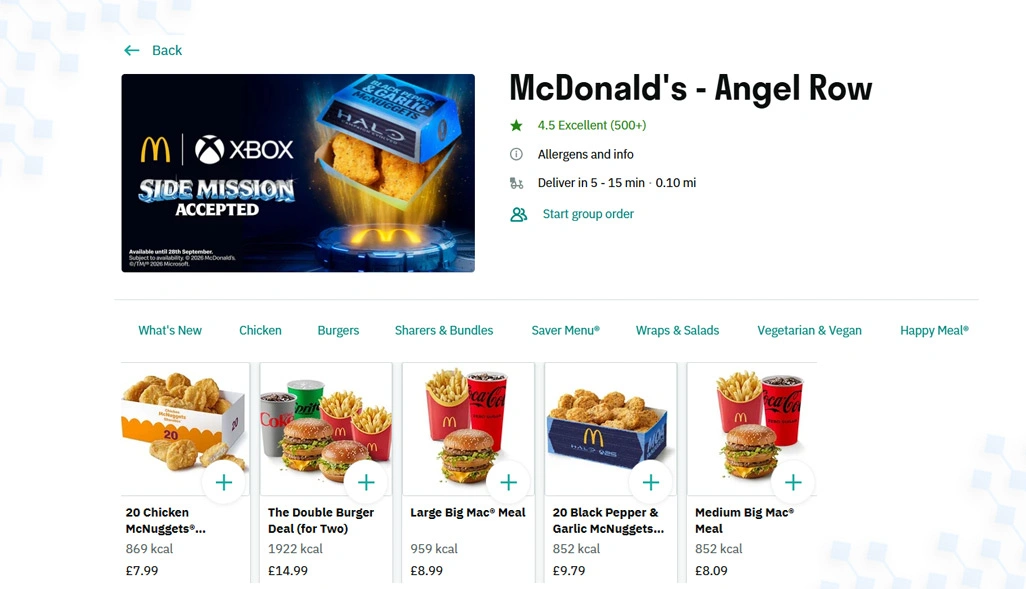
Price and rating information becomes more useful when analyzed together rather than viewed as separate marketplace signals. Deliveroo Restaurant Reviews Scraping can add customer feedback indicators to restaurant records, allowing businesses to compare review volumes and ratings alongside menu breadth and pricing.
This combination can help researchers examine whether restaurants with broader menus, different price ranges, or particular cuisines show different levels of customer engagement across selected markets. Broader Food and Restaurant Datasets can place restaurant-level observations into a wider analytical framework. Businesses can combine restaurant names, locations, cuisine categories, pricing information, ratings, and review counts to create consistent comparison models.
Such structured information can support neighborhood-level research, cuisine benchmarking, competitor identification, and pricing studies. Instead of evaluating restaurants individually, analysts can group businesses according to shared characteristics and identify recurring patterns across larger samples.
Several indicators can strengthen competitive restaurant research:
- Average listed item price
- Overall restaurant rating
- Review volume
- Cuisine category
- Menu size
- Geographic location
Indicator and Business Application:
| Indicator | Business Application |
|---|---|
| Average Price | Pricing comparison |
| Rating | Customer perception |
| Review Volume | Engagement measurement |
| Cuisine | Category analysis |
| Location | Geographic benchmarking |
Combining these signals can help businesses understand how restaurants position themselves within crowded delivery markets. For example, analysts may compare restaurants offering similar cuisines while examining differences in average prices, ratings, and menu assortment.
This type of structured comparison can support competitor monitoring and market research while reducing dependence on manual page-by-page review. The resulting analysis can also be incorporated into dashboards or periodic reports for internal business teams.
Availability Signals Add Context To Restaurant Performance
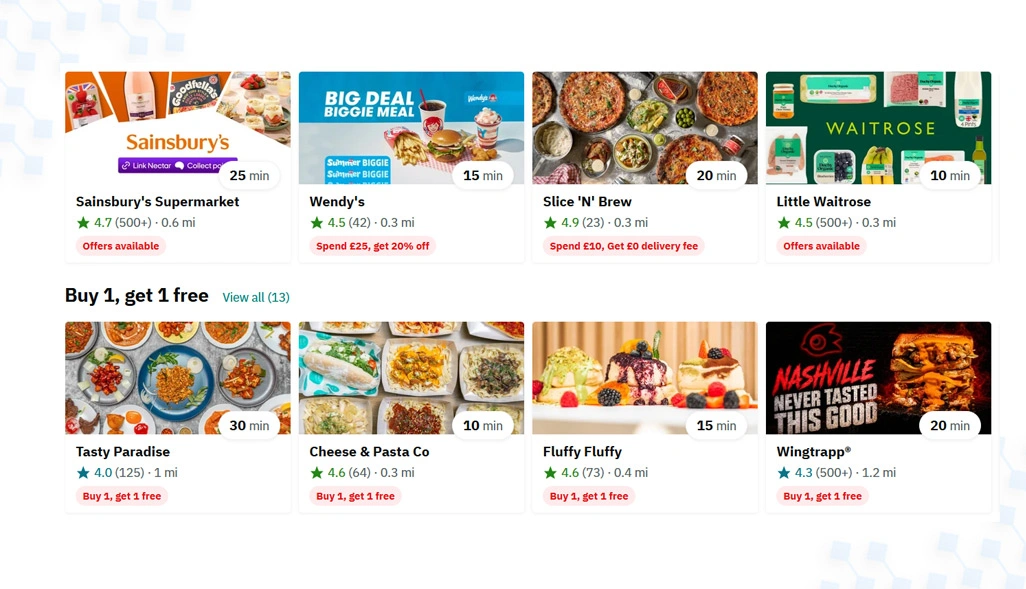
Restaurant availability provides another important layer for understanding marketplace conditions because visible listings can change according to operating hours, location, delivery coverage, menu status, and other time-sensitive factors. Web Scraping Deliveroo Delivery Data can support research into these visible delivery-related signals when collected through an appropriate and compliant process.
Repeated observations can help analysts understand how restaurant visibility differs across locations and time periods. Through Food Data Scraping, businesses can organize restaurant information alongside availability-related fields, menu records, pricing details, and operating information. This creates a broader dataset for analyzing how restaurant listings appear under different marketplace conditions.
Time-based collection can be especially useful for identifying changes in visible availability, menu assortment, and restaurant presence. However, these observations represent specific collection points and should not automatically be treated as permanent operating conditions.
Useful availability-related signals can include:
- Restaurant open or closed status
- Visible operating hours
- Delivery coverage
- Menu availability
- Item-level status
- Restaurant listing visibility
Availability Field and Analytical Purpose:
| Availability Field | Analytical Purpose |
|---|---|
| Operating Status | Time-based comparison |
| Delivery Coverage | Geographic assessment |
| Menu Status | Assortment monitoring |
| Operating Hours | Schedule analysis |
| Listing Visibility | Marketplace research |
A Deliveroo Restaurant Listing Data Extraction workflow can help organize these marketplace observations into consistent restaurant records. Analysts can then compare availability patterns across locations, restaurant categories, and collection periods. This information may support operational research, competitor monitoring, geographic studies, and marketplace analysis.
Since restaurant availability can change quickly, businesses should define collection frequency carefully and maintain timestamps for reliable interpretation. Collection activities should also respect applicable terms, access restrictions, privacy obligations, and other relevant requirements.
How Web Data Crawler Can Help You?
Our Deliveroo Restaurant Data Scraping becomes more practical when collection, cleaning, structuring, and monitoring are handled through an organized workflow. We can help businesses collect relevant public restaurant information and convert scattered marketplace signals into structured datasets for analysis, reporting, and business intelligence.
Key capabilities can include:
- Automated collection across selected restaurant pages
- Structured extraction of menus and item-level information
- Location-based restaurant data organization
- Scheduled monitoring of visible price changes
- Data cleaning and duplicate-record management
- Export-ready datasets for analytics platforms
The workflow can also support standardized fields, making restaurant records easier to compare across different locations and categories. Instead of manually reviewing individual pages, businesses can work with organized datasets that are prepared for dashboards, benchmarking, market research, and trend analysis.
For larger workflows, a Deliveroo Restaurant Data API can provide structured access to collected information where an appropriate API or authorized data source is available. Businesses should define collection frequency, required fields, geographic coverage, and compliance requirements before setting up an automated pipeline.
Conclusion
Restaurant marketplaces contain valuable signals across menus, prices, ratings, reviews, locations, and availability. Deliveroo Restaurant Data Scraping can organize these signals into structured information that supports competitive research, pricing analysis, restaurant benchmarking, and food-market studies.
When combined with consistent Deliveroo Restaurant Listing Data Extraction, businesses can build a clearer view of restaurant positioning and marketplace changes over time. Contact Web Data Crawler to discuss your restaurant data collection requirements and create a structured workflow aligned with your research objectives.