


How Does Blinkit & Zepto Data API for Grocery Price Intelligence Simplify Real-Time Price Tracking?
Aug 26, 2026
Introduction
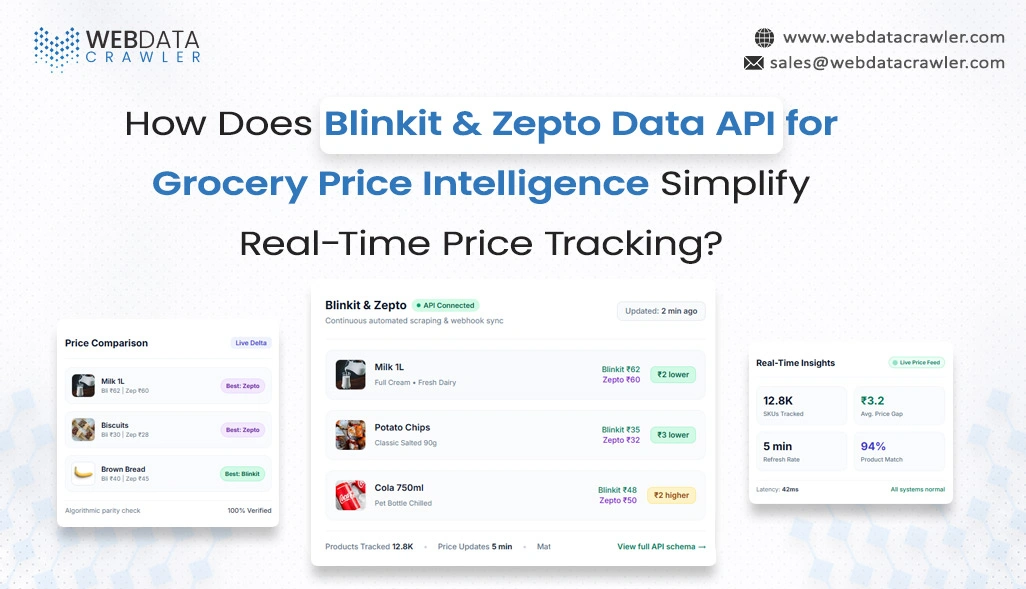
Real-time grocery pricing changes quickly as brands adjust discounts, availability, pack sizes, and promotional offers. Businesses need structured information to compare these changes without depending on manual checks. Blinkit & Zepto Data API for Grocery Price Intelligence provides a streamlined way to collect and organize marketplace pricing information for faster competitive analysis.
With automated collection, businesses can monitor product prices, discounts, availability, ratings, and related attributes across leading quick-commerce platforms. A Blinkit Grocery Data API can support structured data workflows, while automated extraction reduces repetitive research and improves consistency. This helps pricing teams work with fresher information across large product catalogs.
The result is a more practical approach to grocery price intelligence. Instead of checking individual listings repeatedly, businesses can receive organized datasets that support pricing comparisons, promotion analysis, assortment decisions, and market research. The approach also helps teams identify meaningful price movements and respond to changing competitive conditions more efficiently.
Simplify Real-Time Grocery Price Tracking Across Markets
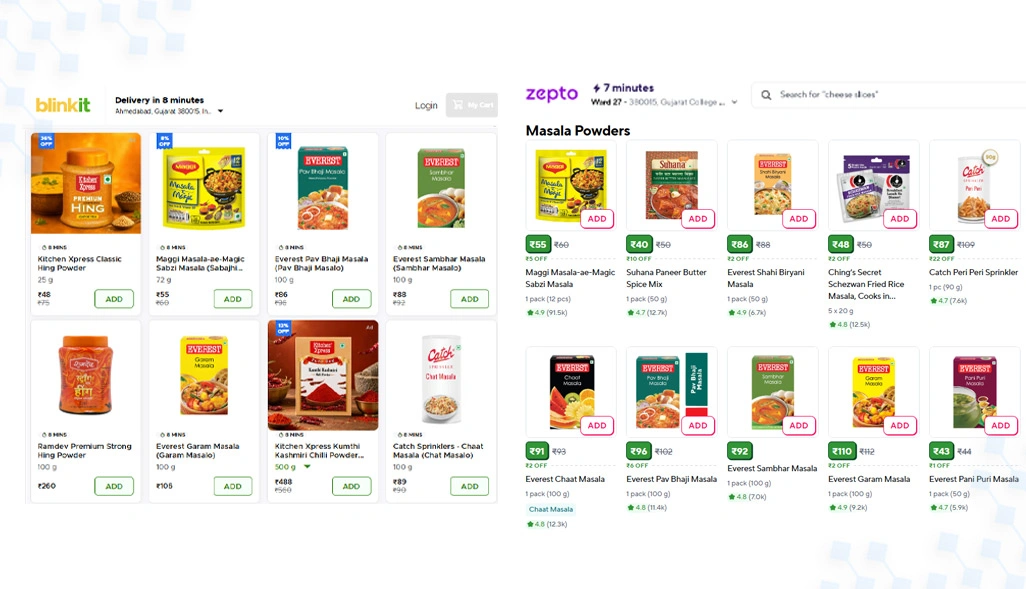
Tracking grocery prices manually becomes increasingly difficult when product catalogs contain thousands of SKUs and prices change throughout the day. Businesses need consistent collection processes that capture current information while preserving historical observations. Automated workflows can organize product-level information into structured datasets, making recurring comparison easier and reducing repetitive research for pricing teams.
A structured Grocery Price Monitoring API for Real Time Tracking can help businesses receive regularly collected information according to defined schedules and requirements. Such workflows can capture prices, discounts, availability, brands, pack sizes, and timestamps. This enables analysts to compare marketplace conditions without repeatedly visiting individual listings and manually recording changes across large product catalogs.
| Tracking Requirement | Business Benefit |
|---|---|
| Product prices | Competitive comparison |
| Discounts | Promotion evaluation |
| Availability | Stock assessment |
| Pack sizes | Product comparison |
| Timestamps | Historical monitoring |
Businesses can also establish workflows around a Zepto Grocery Data API to organize relevant marketplace information for product comparison and competitive analysis. Data can be normalized into consistent formats so pricing teams can evaluate similar products more efficiently. Historical records can additionally help identify recurring price changes, promotional periods, and differences between current and previous observations.
- Automated recurring collection
- Structured product records
- Historical price comparison
- Flexible refresh schedules
Improve Competitive Analysis Through Product Price Changes
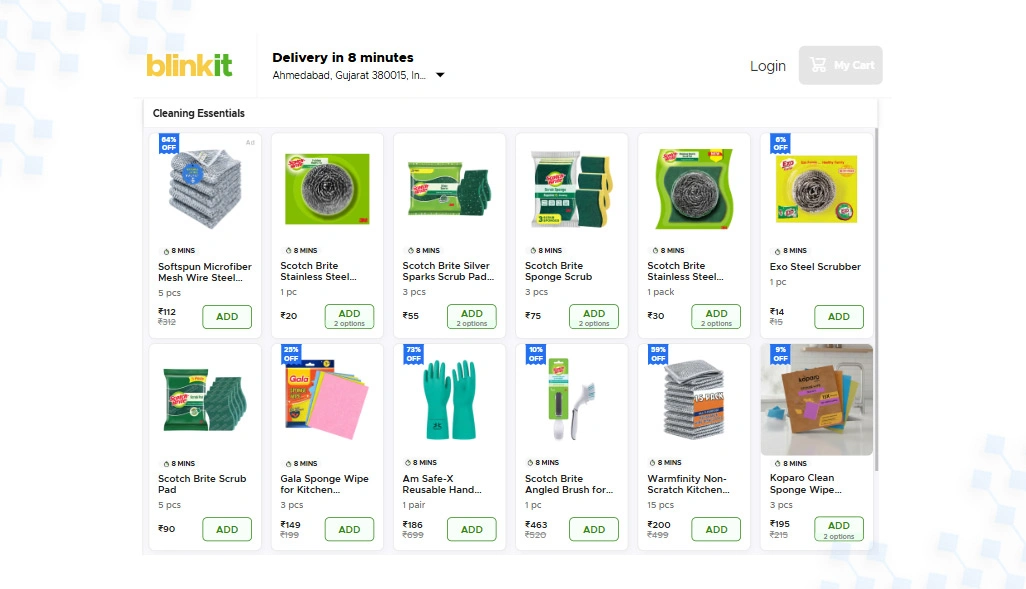
Grocery prices can vary according to promotions, demand, inventory levels, product sizes, locations, and competitive activity. Monitoring these variables together provides greater context than examining price alone. Businesses can organize product-level information and compare marketplace observations to understand where pricing differences occur and which products experience frequent changes.
Using Blinkit Price Data Scraping for Better Strategy can support the collection of product information required for competitive evaluation. Businesses can analyze prices alongside discounts, availability, brands, and pack sizes to identify meaningful differences. These observations can then contribute to pricing reviews, promotional assessments, assortment planning, and broader market intelligence initiatives.
| Analysis Area | Practical Application |
|---|---|
| Price movement | Competitive benchmarking |
| Discount changes | Promotion analysis |
| Product availability | Stock monitoring |
| Brand comparison | Market evaluation |
| Historical records | Trend assessment |
A structured Web Scraping Zepto Grocery Data workflow can further help collect relevant product information at defined intervals. Instead of relying on occasional manual checks, organizations can establish repeatable processes for gathering and formatting marketplace records. Historical observations make it easier to compare current conditions with earlier data and identify recurring pricing or promotional patterns.
- Product-level comparison
- Recurring marketplace observation
- Historical record maintenance
- Structured data preparation
Turn Historical Grocery Data Into Better Decisions
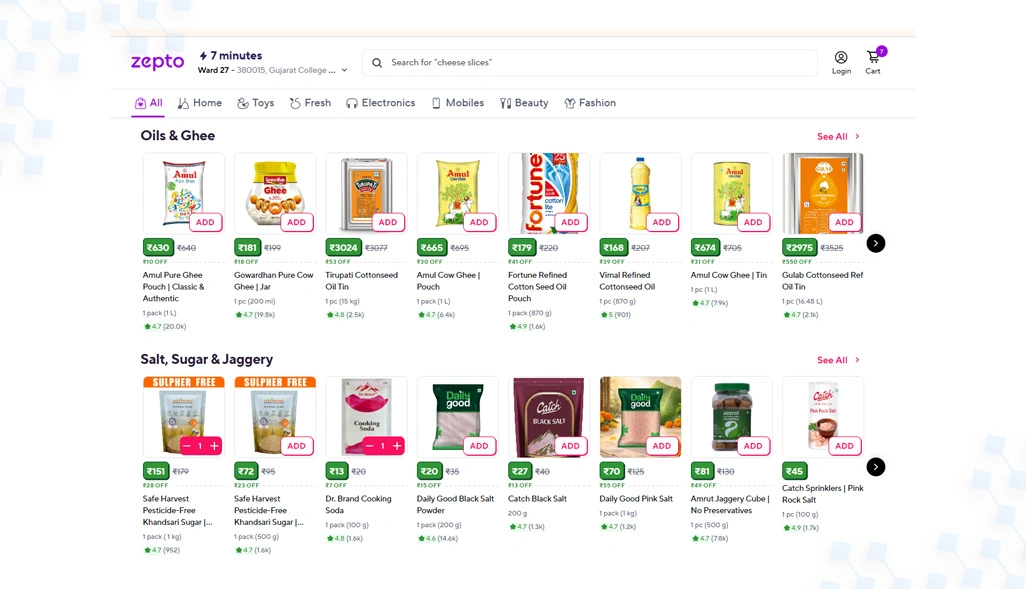
Current grocery prices provide immediate information, but historical records offer deeper context for strategic planning. Businesses can compare previous and current prices to identify recurring movements, promotional patterns, assortment changes, and product availability trends. This creates a stronger foundation for evaluating market behavior rather than relying only on isolated observations.
Organizations can Scrape Zepto Price Datasets to create structured historical records for analytical workflows. These datasets can support comparisons across products, brands, pack sizes, and time periods. When refreshed consistently, historical information can help analysts identify frequently changing products and understand how promotional activity affects competitive positioning.
| Data Category | Decision Support |
|---|---|
| Historical prices | Trend evaluation |
| Product attributes | Assortment planning |
| Discount records | Promotion assessment |
| Availability history | Stock analysis |
| Brand information | Competitive benchmarking |
A structured Blinkit Quick Commerce Dataset can also support broader grocery market analysis by organizing product attributes into consistent records. Businesses can use these datasets for reporting, benchmarking, forecasting, and assortment evaluation. Connecting structured information with internal analytics tools can make recurring market assessments more systematic and easier to scale.
- Historical price analysis
- Product trend identification
- Assortment evaluation
- Competitive benchmarking
How Web Data Crawler Can Help You?
Businesses handling large grocery catalogs need an automated process that can collect, organize, and refresh information consistently. Blinkit & Zepto Data API for Grocery Price Intelligence can support this requirement by connecting structured marketplace information with downstream analytics and reporting workflows.
We can help businesses establish customized data collection processes based on their required products, locations, attributes, and refresh schedules. Key capabilities include:
- Automated product information collection
- Scheduled data refresh workflows
- Structured data formatting and normalization
- Product and competitor comparison support
- Historical data organization
- Integration-ready datasets for analytics
These capabilities can reduce repetitive manual research while making recurring price intelligence easier to manage. Businesses can also combine Grocery Price Intelligence via API Scraping with dashboards, databases, or internal analytics systems to support continuous monitoring and faster decision-making.
Conclusion
Real-time grocery intelligence depends on timely, structured, and comparable information. Blinkit & Zepto Data API for Grocery Price Intelligence can simplify recurring price collection while helping businesses evaluate products, promotions, availability, and competitive movements through organized datasets. This creates a stronger foundation for pricing and merchandising decisions.
Businesses can build workflows around recurring observations, historical comparisons, and actionable reporting instead of relying on occasional checks. Grocery Price Monitoring API for Real Time Tracking can further support these recurring intelligence requirements. Contact Web Data Crawler today to build a customized grocery price intelligence solution tailored to your products, markets, and monitoring requirements.