


Why Is BigBasket Product Catalog Scraping for Insights a Practical Route to Better Catalog Data?
07 September 2026
Introduction
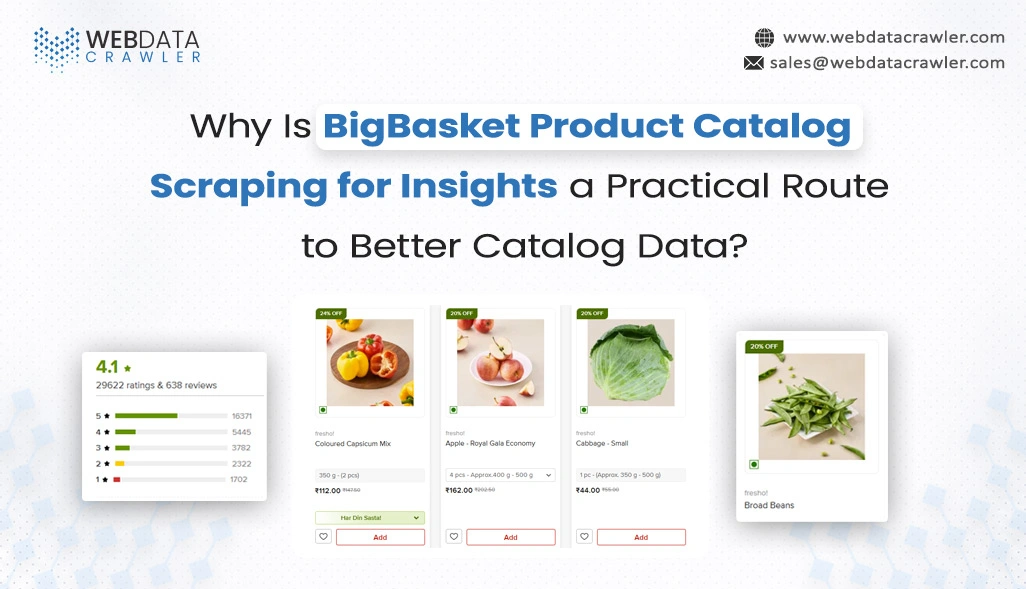
Grocery marketplaces continuously change product names, prices, pack sizes, brands, categories, discounts, and availability. For retailers and analysts, manually tracking these changes can create inconsistent datasets and slow down-market research. BigBasket Product Catalog Scraping for Insights provides structured information that supports catalog monitoring, competitor analysis, and pricing intelligence.
BigBasket presents a broad grocery assortment spanning fresh produce, staples, beverages, personal care, household products, and other categories. Its website states that the platform offers over 40,000 products from more than 1,000 brands and serves over 10 million customers. This scale makes systematic catalog collection useful for businesses assessing product movements.
With a structured Big Basket Data Scraping Service, businesses can collect product attributes at recurring intervals and convert scattered marketplace information into organized datasets. This approach helps teams compare product availability, identify pricing movements, examine category depth, and maintain updated records for retail intelligence and planning.
Sharper Catalog Perspectives Through Structured Grocery Market Intelligence
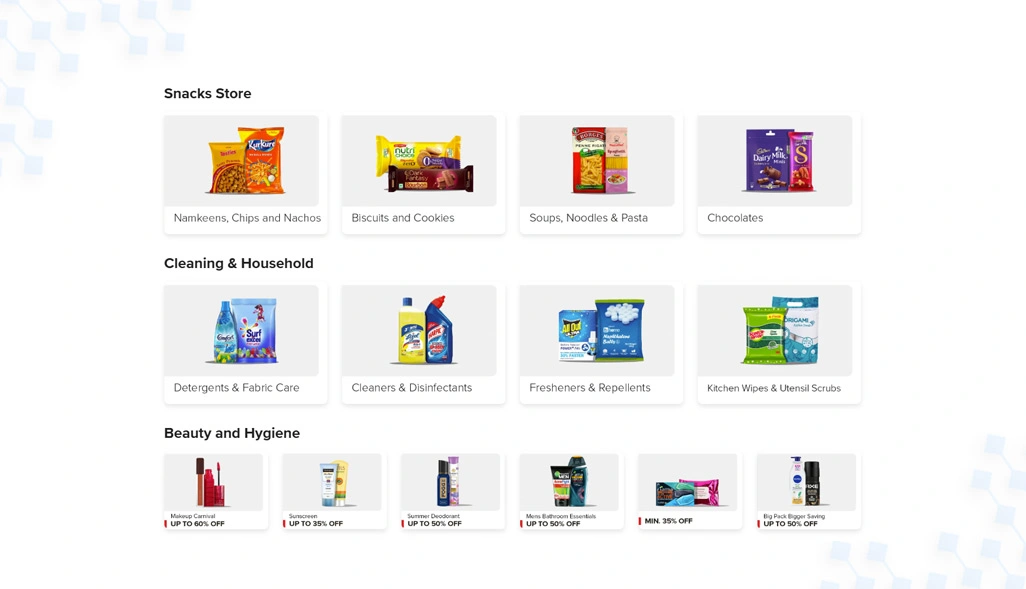
A detailed product catalog gives retailers a clearer understanding of assortment depth, product positioning, and category coverage. Grocery marketplaces can contain thousands of listings across food, beverages, household supplies, personal care, and fresh products. Midway through this process, BigBasket Grocery Data Crawler workflows can help collect recurring catalog information and maintain consistent records.
Catalog analysis becomes particularly valuable when businesses compare products using standardized attributes. Product names, brands, categories, pack sizes, descriptions, ratings, and availability can be aligned into a common structure. This makes it easier to identify duplicate listings, compare similar products, evaluate assortment gaps, and understand which categories contain extensive or limited selections.
Retail teams can examine how many products individual brands offer, which pack sizes appear most frequently, and how products are distributed across categories. BigBasket Product Listing Scraping for Analysis can support this process by turning marketplace listings into organized records suitable for filtering, comparison, reporting, and recurring research.
Key catalog analysis areas:
- Product and brand coverage
- Category-level assortment depth
- Pack-size distribution
- New and discontinued products
- Product availability changes
- Duplicate and similar listings
Businesses can further improve catalog monitoring by reviewing changes across repeated collection cycles. New products, discontinued items, modified descriptions, altered pack sizes, and category movements can be identified more efficiently when historical records are available.
| Catalog Attribute | Business Use |
|---|---|
| Product Name | Product identification |
| Brand | Brand comparison |
| Category | Assortment evaluation |
| Pack Size | Product-level comparison |
| Rating | Customer response analysis |
Smarter Pricing Signals From Continuous Marketplace Data Monitoring
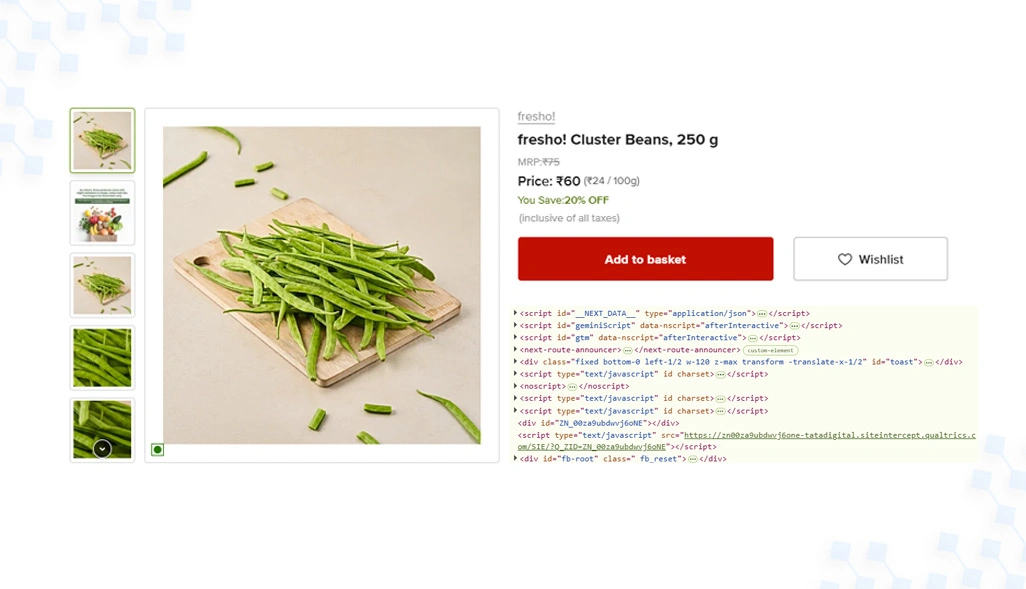
Price information can change frequently across grocery marketplaces because of promotions, seasonal campaigns, product-level discounts, and competitive positioning. Monitoring these movements manually across numerous products requires substantial effort. A structured data workflow allows retailers to capture pricing attributes consistently and compare changes across products, categories, and brands over selected periods.
Businesses can evaluate selling prices alongside original prices, discount percentages, pack sizes, and availability indicators. This creates a stronger foundation for identifying price gaps and understanding promotional patterns. When recurring collection is combined with BigBasket Now Quick Commerce Data API, teams can incorporate regularly refreshed information into pricing dashboards, competitive monitoring systems, or analytical workflows.
Promotional analysis can reveal which products frequently receive discounts and how pricing differs across comparable pack sizes. Retailers can use these observations to assess competitive positioning and identify products where their pricing may require review. BigBasket Product Data API for Real Time Analysis can further support data-driven workflows where timely product and pricing information is important for ongoing market evaluation.
Important pricing monitoring areas:
- Selling-price movements
- Discount frequency
- Promotional changes
- Pack-size price comparisons
- Brand-level price differences
- Category-level pricing trends
Historical price records provide additional value because individual snapshots may not explain broader pricing behavior. By comparing records collected at different intervals, analysts can identify recurring discounts, price increases, promotional cycles, and changes in product positioning. These observations can contribute to better pricing strategies and more informed merchandising decisions.
| Pricing Factor | Analytical Purpose |
|---|---|
| Selling Price | Current price comparison |
| Original Price | Discount assessment |
| Discount Rate | Promotion evaluation |
| Pack Size | Unit-level comparison |
| Availability | Sales opportunity assessment |
Actionable Market Patterns Through Comprehensive Product Data Analysis
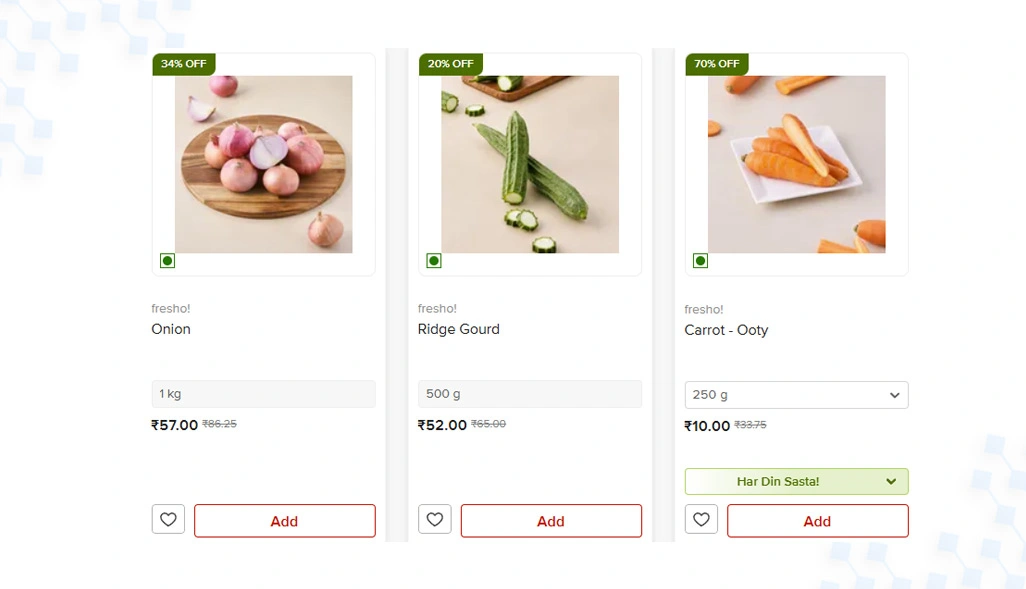
Catalog information becomes more useful when individual records are transformed into measurable business indicators. Retailers can combine product, brand, category, pricing, rating, availability, and pack-size attributes to understand broader marketplace patterns. This creates opportunities to evaluate assortment structure and identify emerging changes across different grocery segments.
A standardized dataset also allows analysts to segment products according to brands, categories, price ranges, and pack sizes. BigBasket Quick Commerce Dataset structures can support historical comparisons where businesses need to examine product movements across recurring collection periods. Such datasets can also simplify reporting by keeping relevant attributes within consistent records.
Market intelligence becomes stronger when catalog observations are connected with competitive research. Businesses can identify categories with expanding assortments, brands appearing across multiple segments, or products receiving repeated promotional attention. BigBasket Grocery Product Data can provide structured information that supports these comparisons and helps analysts transform raw catalog records into practical market indicators.
Key market intelligence applications:
- Assortment gap identification
- Brand penetration analysis
- Category movement tracking
- Pack-size comparison
- Promotional pattern evaluation
- Competitive benchmarking
Recurring analysis can also support assortment planning by highlighting areas where competitors maintain deeper product coverage. Retailers may identify underrepresented categories, compare pack-size strategies, and assess product variety across segments. Over time, these signals can contribute to more informed merchandising, catalog planning, and competitive benchmarking.
| Data Dimension | Potential Insight |
|---|---|
| Brand | Brand presence |
| Category | Market segmentation |
| Product | Assortment coverage |
| Pack Size | Consumer choice patterns |
| Rating | Product perception |
| Availability | Catalog continuity |
How Web Data Crawler Can Help You?
Retail teams often need recurring marketplace information without spending extensive time checking individual product pages. BigBasket Product Catalog Scraping for Insights can help convert marketplace information into organized records that are easier to compare, filter, analyze, and integrate into internal workflows.
We can support catalog intelligence through a structured extraction and delivery process:
- Capture product information across relevant catalog pages.
- Standardize names, brands, categories, and pack-size attributes.
- Record selling prices, discounts, and promotional information.
- Track availability changes across repeated collection cycles.
- Organize collected records into analysis-ready datasets.
- Deliver structured information for dashboards, research, and business systems.
The resulting catalog workflow can help teams maintain cleaner historical records and evaluate assortment changes with greater consistency. Data can also be prepared for competitive research, pricing intelligence, category planning, and internal reporting while reducing repetitive manual catalog checks.
These capabilities make the collected information suitable for multiple retail applications. Businesses can use the resulting BigBasket Product Listing Scraping for Analysis workflow to support assortment comparisons, pricing research, brand monitoring, market studies, and recurring catalog intelligence without depending entirely on manual observation.
Conclusion
A well-structured grocery catalog can provide valuable signals about pricing, assortment, brands, categories, promotions, and product positioning. BigBasket Product Catalog Scraping for Insights gives businesses a systematic way to organize these changing marketplace attributes and turn recurring catalog observations into usable retail intelligence.
When product information is consistently collected and standardized, teams can evaluate market movements more efficiently and support data-driven merchandising decisions. Scrape BigBasket Product Dataset workflows can further help create historical records for recurring analysis, benchmarking, and catalog monitoring. Connect with Web Data Crawler today to build a customized BigBasket catalog data solution for your retail intelligence needs.