
What Makes Automated Retail Price Monitoring Using Web Scraping APIs Drive 43% Faster Pricing Decisions?
May 12
Introduction
Retail pricing changes happen faster than ever, especially across digital marketplaces where thousands of product listings update by the hour. Businesses that depend on timely pricing insights often struggle to track fluctuations manually, which slows strategic reactions and reduces market competitiveness. This is why Automated Retail Price Monitoring Using Web Scraping APIs has become central to retail analytics.
Across retail ecosystems, pricing data now affects inventory planning, campaign design, supplier negotiations, and customer retention. Studies show that brands using automated data collection improve pricing decisions by up to 43% while reducing manual research time by over 55%. The integration of Web Scraping Ecommerce Data allows organizations to monitor product catalogs, stock status, discounts, and regional price changes with high consistency.
Retail teams increasingly use automated systems to reduce dependency on fragmented spreadsheets and delayed reports. As product assortment expands, scalable APIs become the preferred method for collecting normalized data across hundreds of sources. The result is a pricing framework that aligns directly with customer demand, competitor movement, and market trends, enabling more responsive retail operations.
Building Reliable Market Visibility Across Pricing Channels
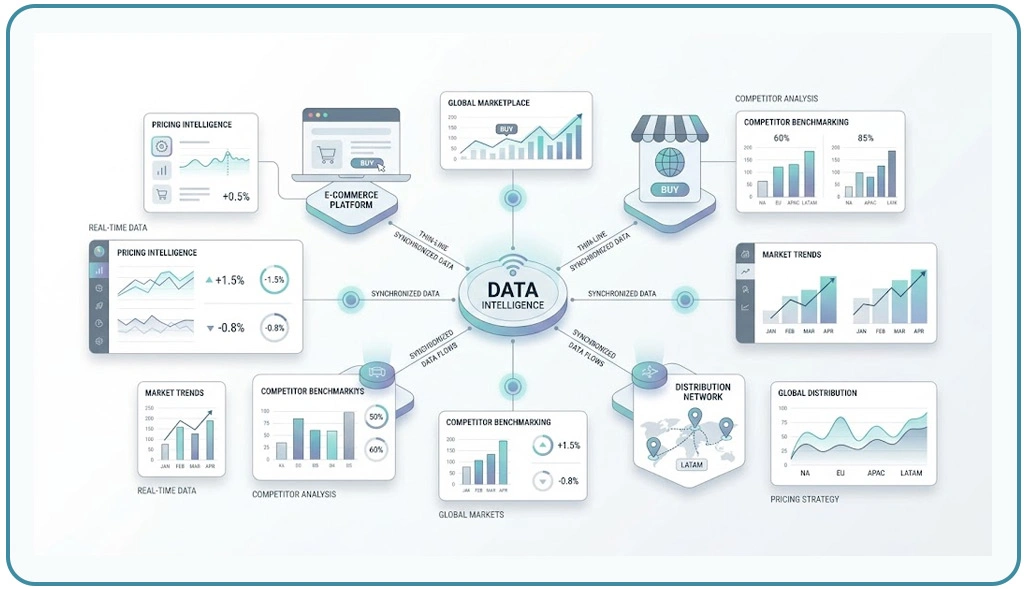
Retail organizations struggle when pricing information is scattered across multiple marketplaces, regional stores, and product catalogs. Manual collection slows operations, reduces visibility, and limits how quickly teams can adjust prices. Studies show more than 61% of retail businesses face revenue loss due to delayed pricing decisions caused by fragmented datasets. Centralized data systems reduce these gaps and improve planning.
To solve this challenge, retailers combine scraping ecommerce data with E-Commerce Datasets to create structured market views. These sources help organizations monitor discounts, product availability, and competitor changes at scale. Reliable collection enables pricing teams to compare category performance and identify patterns influencing demand.
A scalable framework often depends on Scrape Scalable Pricing Intelligence for Designing Data APIs to unify large volumes of external retail data. By organizing inputs into one stream, companies eliminate reporting delays and improve operational transparency. This process supports pricing adjustments based on actual market conditions instead of assumptions.
| Challenge | Business Effect | Outcome |
|---|---|---|
| Fragmented pricing sources | Slow visibility | Missed revenue |
| Manual collection | Delayed actions | Weak planning |
| Regional inconsistency | Poor comparison | Lower accuracy |
Retailers that centralize pricing information often reduce decision time by 43% while improving campaign alignment and product-level analysis. Organizations also benefit from connecting internal sales data with external retail signals. This integration helps detect demand shifts earlier and improves campaign planning.
Strengthening Pricing Operations Through Continuous Insights
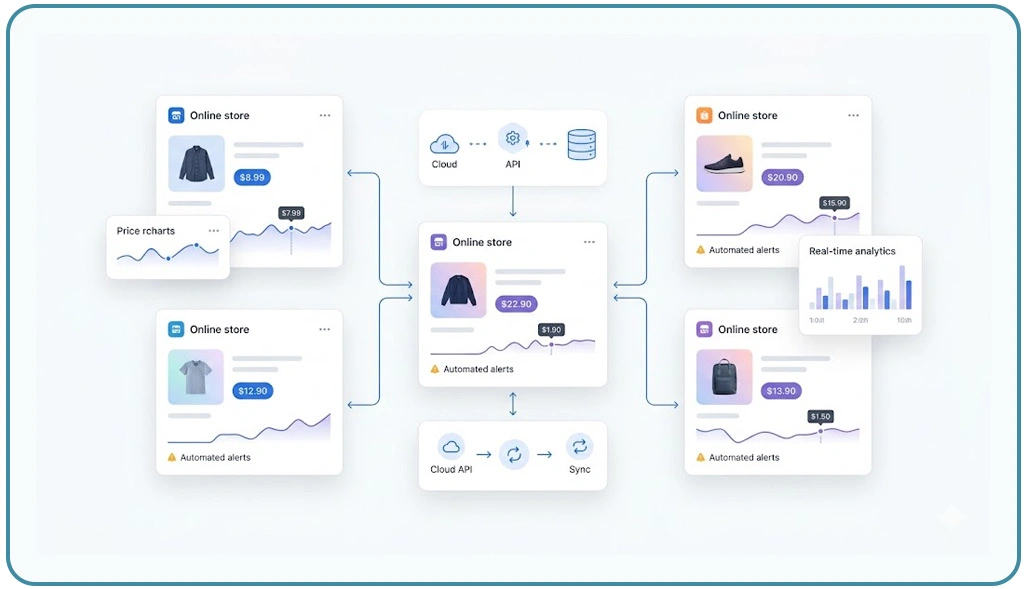
Retail pricing changes rapidly during promotions, stock fluctuations, and regional campaigns. Traditional reporting often fails because data is outdated by the time analysts review it. Continuous monitoring solves this by creating live data streams that support faster operational decisions and stronger market adaptation.
Retail companies increasingly rely on Pricing Intelligence to evaluate competitor shifts and promotional trends. Structured pricing feeds help businesses identify category gaps, regional demand changes, and inventory-driven pricing patterns. This allows pricing managers to align adjustments with customer expectations while maintaining healthy margins.
Many enterprises implement E-Commerce Competitor Price Monitoring APIs to capture competitor pricing updates automatically. These APIs collect catalog prices, discounts, and stock changes across digital channels. Paired with API Development for Retail Pricing Analytics via Scraping, organizations transform raw retail signals into dashboards that improve decision quality and support cross-team reporting.
| Operational Area | Traditional Method | Automated Method |
|---|---|---|
| Data updates | Daily batch | Continuous |
| Promotion tracking | Limited | Full |
| Decision speed | Slow | Fast |
Automated systems also support historical benchmarking. By comparing weekly and seasonal price movements, businesses identify patterns that influence conversions. Continuous intelligence improves pricing confidence and supports better market responsiveness, helping retailers reduce uncertainty while improving revenue planning.
Driving Competitive Action Through Smarter Comparisons
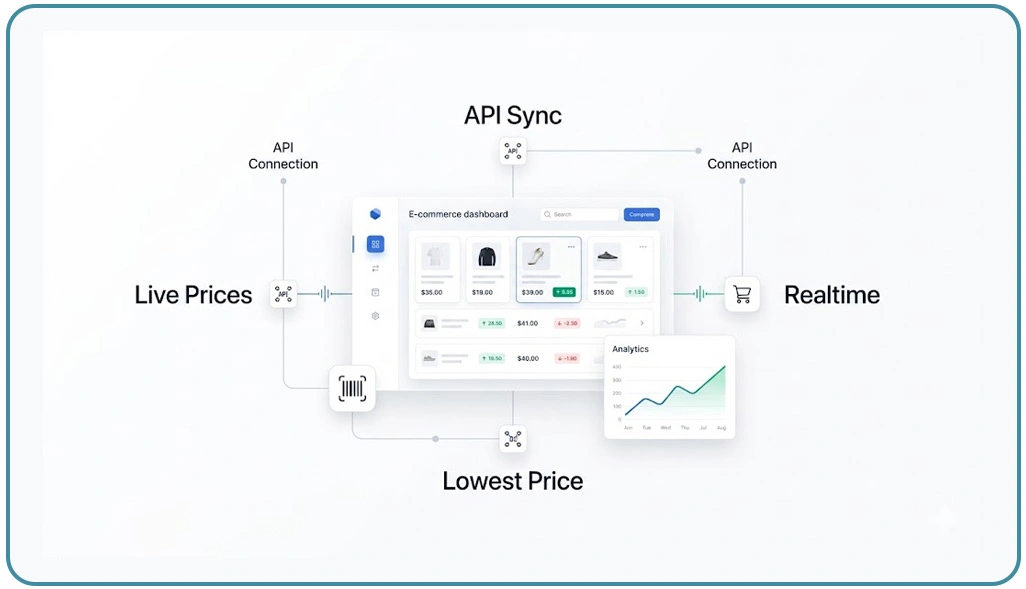
Modern ecommerce competition depends on rapid pricing comparisons. Customers review multiple sellers instantly, making price transparency a key factor in conversion. Retailers that fail to track competitors consistently often lose market share during promotional cycles. Strong comparison systems help businesses stay responsive and maintain visibility.
Many brands now use Competitor Price Monitoring to analyze rival pricing patterns and campaign strategies. This process reveals which products are discounted most frequently, how regional promotions differ, and where customer demand shifts are occurring. These insights help teams improve category management and reduce reaction time.
A growing number of companies implement Real-Time Retail Price Tracking APIs for Ecommerce to monitor pricing changes continuously. These systems collect SKU-level updates and provide alerts for discounts, stock shortages, and promotional shifts. Combined with Dynamic Pricing Strategy Using Retail Data APIs, retailers can adjust prices based on competitor moves and changing customer demand.
| Competitive Metric | Before Automation | After Automation |
|---|---|---|
| Discount response | 2 days | 3 hours |
| Promotion visibility | Partial | Complete |
| Market comparison | Limited | Accurate |
Continuous comparison also improves long-term strategy. Businesses can identify recurring trends during holidays, product launches, and regional sales periods. Retailers that strengthen competitive monitoring improve campaign precision, customer retention, and pricing consistency while making faster, data-backed decisions across marketplaces.
How Web Data Crawler Can Help You?
Retail success depends on turning market changes into actionable data. Businesses that integrate Automated Retail Price Monitoring Using Web Scraping APIs create a continuous intelligence pipeline that supports better pricing decisions, product analysis, and regional strategy development.
Our solutions help businesses by:
- Collecting competitor product pricing from multiple marketplaces
- Monitoring catalog changes across regional stores
- Capturing discount movements in real time
- Structuring data into scalable dashboards
- Supporting price benchmarking across categories
- Enabling analytics for strategy optimization
These services help retailers respond faster to market shifts while improving pricing consistency across digital platforms. Through API Development for Retail Pricing Analytics via Scraping, organizations can transform complex retail data into operational insights that support measurable growth.
Conclusion
Retail markets demand rapid action, and companies using Automated Retail Price Monitoring Using Web Scraping APIs improve visibility, speed, and decision quality across pricing operations. Real-time systems reduce delays while helping teams adapt to external changes using structured intelligence.
Long-term growth depends on data-driven pricing. By adopting Dynamic Pricing Strategy Using Retail Data APIs, businesses improve competitiveness, campaign performance, and pricing precision. Connect with Web Data Crawler today to transform your retail pricing strategy with scalable intelligence solutions.