


How Can Amazon Fresh and Walmart Price Scraping for Insights Help Benchmark 500+ Grocery Prices?
Sep 02, 2026
Introduction
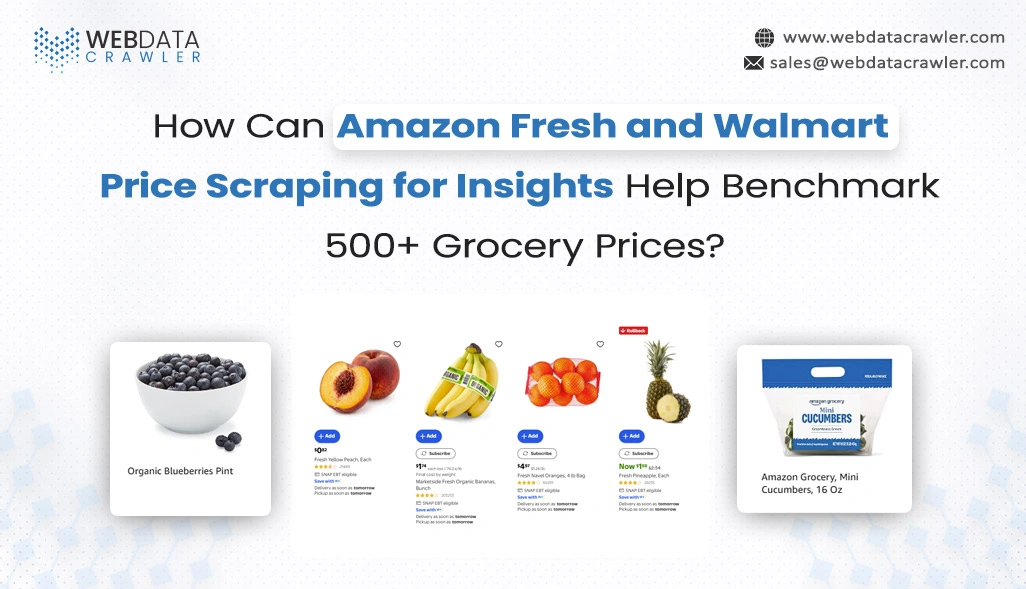
Grocery pricing changes quickly across retailers, making consistent comparison important for brands, retailers, and analysts. Amazon Fresh and Walmart Price Scraping for Insights provides structured pricing information that helps teams compare similar products, identify pricing gaps, and evaluate competitive movements across large grocery catalogs.
Tracking hundreds of grocery products manually can create inconsistent results and consume significant research time. An Amazon Fresh Data Scraping Service can collect product names, prices, discounts, brands, pack sizes, and availability at scheduled intervals, creating a dependable dataset for price benchmarking and market analysis.
When 500+ grocery prices are monitored together, businesses can identify recurring pricing patterns instead of relying on isolated observations. Comparing category-level changes, promotional activity, and price differences helps analysts understand market positioning while supporting more informed assortment, pricing, and competitive strategy decisions.
Establishing Strong Benchmarks Across Grocery Retailers
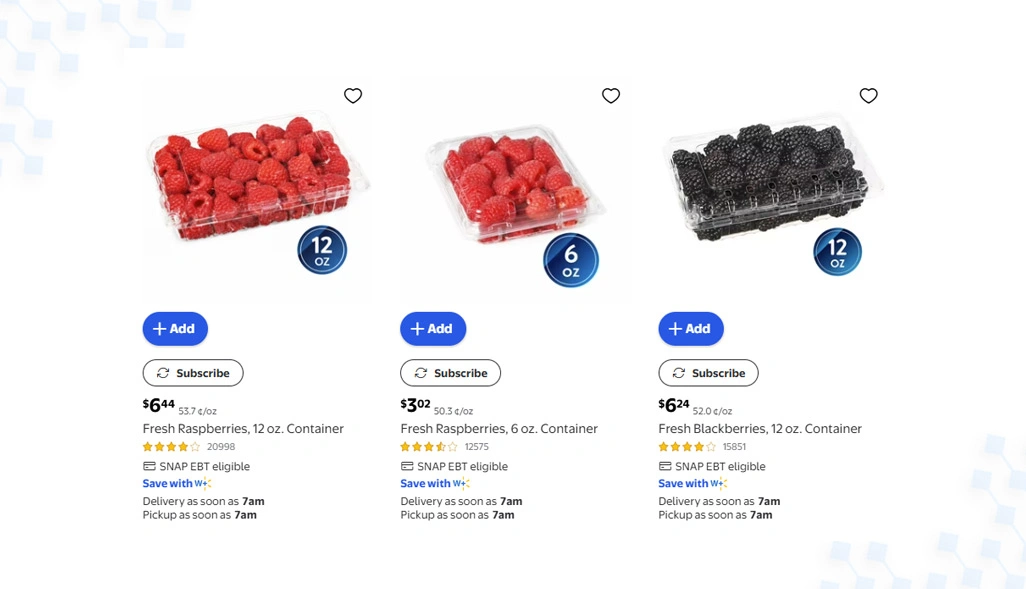
Reliable grocery benchmarking begins with consistent product attributes collected across competing retail catalogs. Analysts can compare product names, brands, categories, pack sizes, prices, discounts, and availability to establish a standardized baseline. A Walmart Data Scraping Service can further organize Walmart product information for recurring competitive evaluations.
For broader competitive research, Grocery Competitive Pricing Data can help businesses identify price differences between comparable products and examine category-level movements. Historical records can also show whether a price gap is temporary or part of a recurring pattern, supporting better interpretation of retailer positioning and promotional behavior.
A structured benchmark can cover hundreds of products while maintaining consistent comparison criteria. Businesses can organize collected information around pricing, product identity, package quantity, discounts, and stock status, allowing analysts to separate genuine price variations from differences caused by product specifications or availability.
| Benchmark Area | Suggested Coverage | Analysis Purpose |
|---|---|---|
| Grocery Products | 500+ | Broad catalog comparison |
| Product Categories | 25+ | Category-level evaluation |
| Price Records | 1,000+ | Historical benchmarking |
| Discount Records | 200+ | Promotion assessment |
A repeatable benchmarking framework also reduces research inconsistencies and makes recurring reviews easier. Instead of checking products individually, teams can evaluate standardized records together and identify meaningful changes across categories, brands, and pricing segments.
- Matching comparable grocery products
- Standardizing product attributes
- Recording recurring price movements
- Monitoring promotional changes
- Comparing category-level pricing
- Maintaining historical price records
Evaluating Matched Products Through Structured Price Comparisons
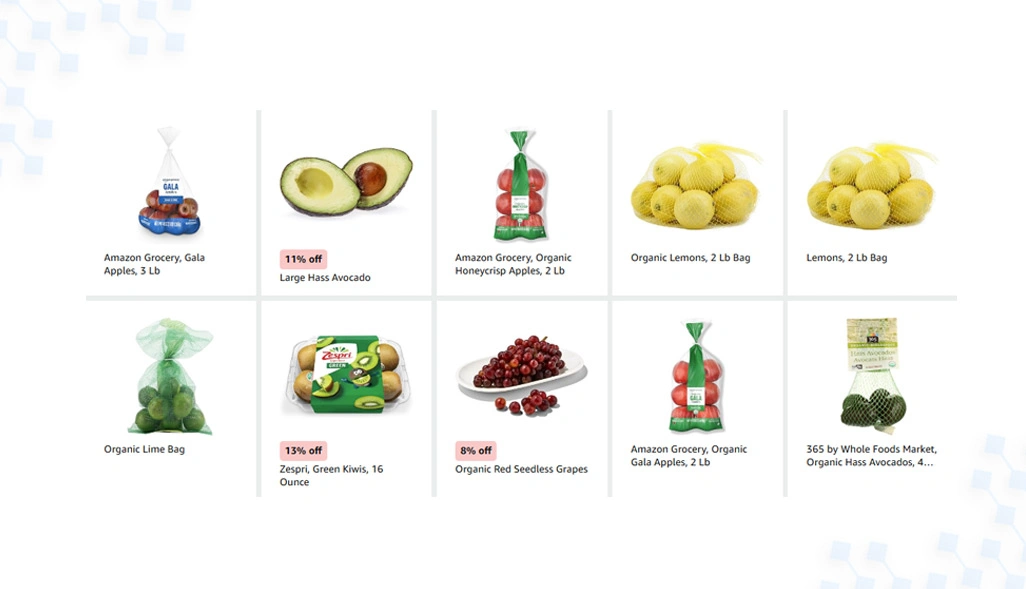
Product comparison becomes more meaningful when information from competing retailers follows the same structure. Analysts can collect product names, brands, package sizes, prices, discounts, and availability before matching comparable items. This approach creates a clearer foundation for identifying actual pricing differences.
Businesses can Scrape Amazon Fresh Grocery Dataset records to organize product-level information for structured comparison. Matching those records with corresponding Walmart products allows teams to assess whether differences originate from promotions, package sizes, product variations, or broader pricing strategies.
An Amazon Fresh Grocery Data API can support recurring access to structured product information within an analytical workflow. Regular data collection helps businesses monitor changes over time rather than depending on occasional snapshots, making it easier to identify repeated pricing movements and promotional patterns.
| Comparison Factor | Example Scope | Analytical Benefit |
|---|---|---|
| Product Price | Current and historical | Price-gap evaluation |
| Package Size | Comparable units | Accurate matching |
| Discounts | Active promotions | Offer comparison |
| Availability | Stock status | Supply visibility |
Structured comparisons can help analysts prioritize products showing significant price differences. For example, a 6% average variation across 120 matched products could indicate a pricing opportunity worth investigating, particularly when similar gaps continue across multiple collection cycles.
- Matching products by attributes
- Comparing equivalent package sizes
- Tracking price differences
- Monitoring promotional activity
- Reviewing availability changes
- Measuring recurring price gaps
Converting Recurring Price Records Into Retail Insights
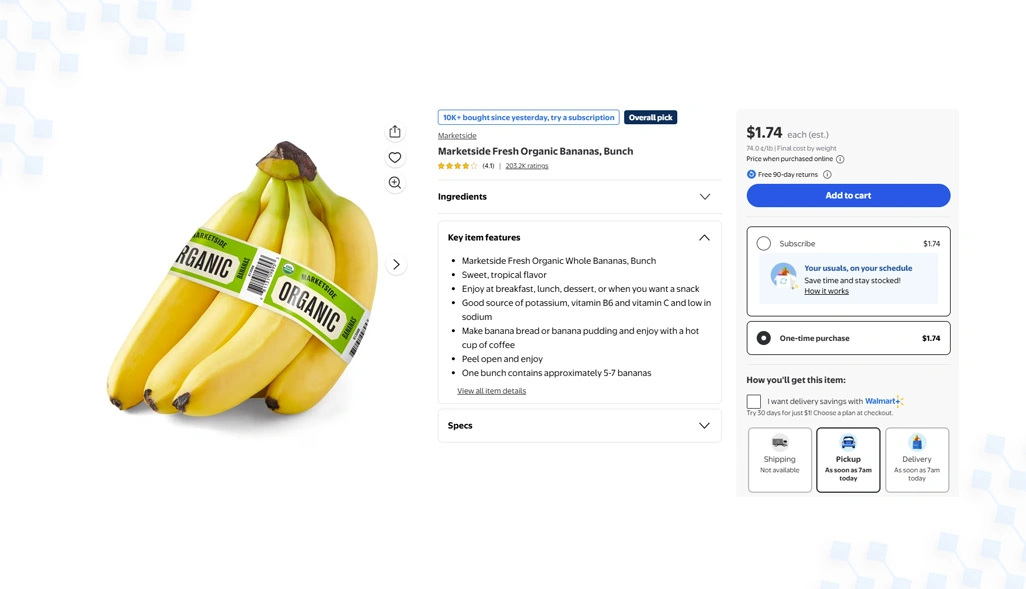
Recurring price collection becomes valuable when individual observations are converted into measurable trends. Businesses can examine changes across categories, brands, product sizes, discounts, and availability to understand how retail pricing evolves. Historical records provide additional context for interpreting short-term fluctuations and long-term movements.
Using Walmart Pricing Data Extraction for Insights, analysts can examine pricing changes across selected categories and identify patterns that may influence competitive positioning. Recurring records can reveal frequently discounted products, unusual price movements, and categories where differences between retailers remain consistent.
A structured Walmart Grocery Data Crawler can support repeated collection of product-level information and reduce the effort associated with manual monitoring. When records are gathered consistently, businesses can compare current observations against earlier datasets and identify meaningful deviations that require further analysis.
| Insight Category | Example Observation | Business Application |
|---|---|---|
| Price Movement | 8% monthly change | Pricing review |
| Promotions | 18% products discounted | Offer evaluation |
| Category Variance | 7% average difference | Positioning review |
| Availability | 12% unavailable | Supply assessment |
Recurring monitoring allows teams to distinguish temporary promotional changes from broader pricing movements. This distinction can improve the quality of competitive assessments and help businesses determine where pricing, assortment, promotional planning, or inventory strategies may require closer attention.
- Tracking recurring price movements
- Measuring promotional frequency
- Comparing category-level differences
- Reviewing product availability
- Identifying unusual price changes
- Evaluating competitive positioning
How Web Data Crawler Can Help You?
For large-scale grocery benchmarking, Amazon Fresh and Walmart Price Scraping for Insights can be supported through an automated collection framework that organizes product information into consistent records. We can help businesses gather pricing information at recurring intervals and prepare structured datasets for comparison, monitoring, and analysis.
Key capabilities include:
- Automated collection of product-level pricing information
- Scheduled monitoring for recurring price changes
- Standardized product and category attributes
- Structured storage for historical comparisons
- Filtering based on brands, categories, and products
- Support for customized data delivery requirements
The resulting datasets can help teams reduce repetitive research and improve the consistency of competitive analysis. Automated workflows can also make it easier to organize large product catalogs and compare pricing observations collected during different periods.
With Scrape Walmart Grocery Prices, businesses can incorporate Walmart pricing records into broader benchmarking workflows while evaluating product-level differences, promotional activity, availability, and category trends. Structured collection also provides a practical foundation for maintaining historical datasets and supporting recurring competitive research.
Conclusion
Consistent grocery monitoring gives businesses a stronger foundation for evaluating retail price movements and competitive positioning. Amazon Fresh and Walmart Price Scraping for Insights helps transform hundreds of individual product observations into structured comparisons that support pricing reviews, promotion analysis, assortment decisions, and recurring market intelligence.
A well-organized approach can make large-scale benchmarking more practical while improving visibility into changing grocery prices. Scrape Walmart Grocery Prices can complement cross-retailer analysis by providing recurring Walmart records for comparison with other grocery datasets. Contact Web Data Crawler to build a customized grocery price dataset for your competitive benchmarking needs.