
What Drives 25% Faster Insights with Amazon Fresh Product Data Scraping for Competitive Intelligence?
July 07 2026
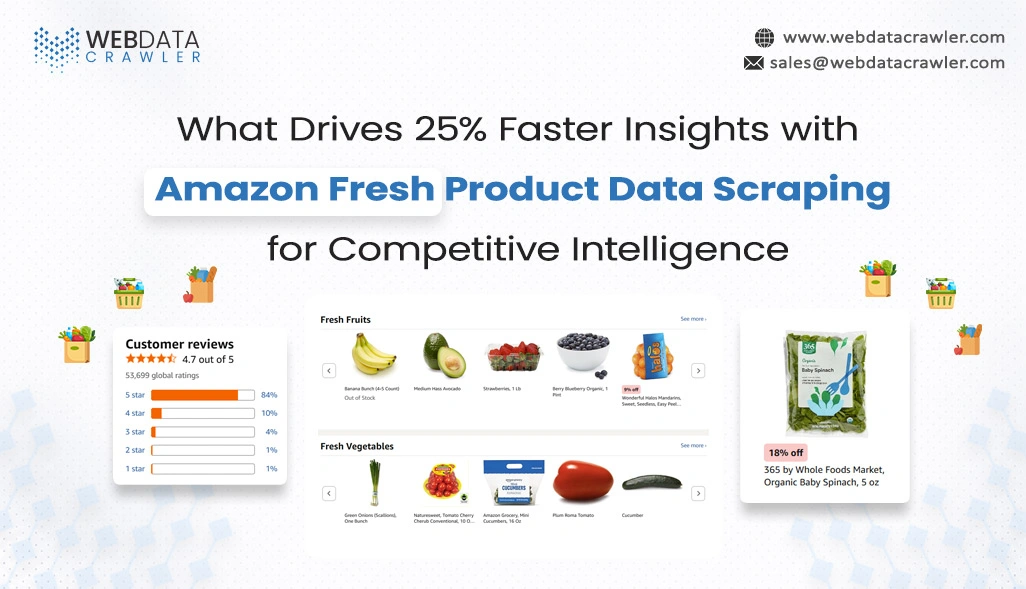
Introduction
The grocery retail market is becoming increasingly competitive as consumers expect accurate availability, fast delivery, attractive prices, and personalized product choices. Digital grocery platforms now change product listings, discounts, stock visibility, delivery windows, and assortment details frequently.
Retailers that rely on manual monitoring often struggle to identify these changes early enough to respond effectively. Amazon Fresh Product Data Scraping helps retail teams collect structured product information from online grocery listings and convert it into useful competitive intelligence. Businesses can monitor category movement, identify pricing gaps, compare branded and private-label products, and evaluate how competitors present similar items to shoppers.
This data-driven approach supports faster decisions across pricing, merchandising, promotions, and inventory planning. An Amazon Fresh Grocery Data API can help businesses access organized product-level information such as names, categories, prices, discounts, ratings, pack sizes, availability, and delivery-related details. With a structured monitoring process, businesses can reduce research delays and improve the speed of strategic action.
Continuous Pricing Visibility for Faster Retail Decisions
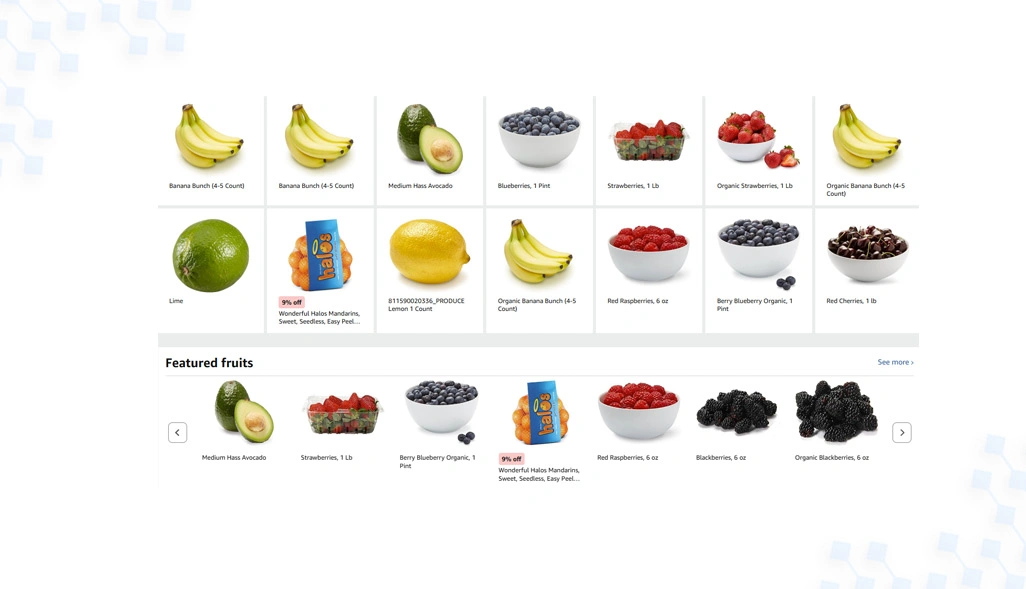
Grocery prices can change frequently due to supplier costs, seasonal demand, local competition, product availability, and promotional campaigns. Manual tracking often creates reporting delays, especially when teams need to compare hundreds of products across multiple categories.
A structured data collection process helps pricing teams monitor product listings at regular intervals and identify important changes before they affect sales performance. Retailers can compare product prices, discount values, unit costs, pack sizes, and branded alternatives to understand how competitors position similar products.
The Amazon Fresh Grocery Data Crawler helps businesses collect organized product-level information for ongoing market comparison. Retailers can use this data to identify price gaps, analyze promotion patterns, and evaluate category-level movement across essential grocery segments.
| Data Point | Business Value | Decision Impact |
|---|---|---|
| Current product price | Identifies competitor price movement | Supports targeted adjustments |
| Discount percentage | Tracks promotional activity | Improves campaign planning |
| Unit price | Compares product value accurately | Strengthens pricing decisions |
| Pack size | Evaluates product variations | Supports fair comparison |
| Brand availability | Identifies assortment differences | Improves category planning |
Industry reports suggest that retailers using frequent pricing intelligence can improve decision response times by up to 25%. Amazon Fresh Price Scraping for Competitor Analysis enables retailers to compare prices at a detailed level and create more informed pricing strategies across changing grocery categories.
Stock Availability Intelligence for Stronger Grocery Planning
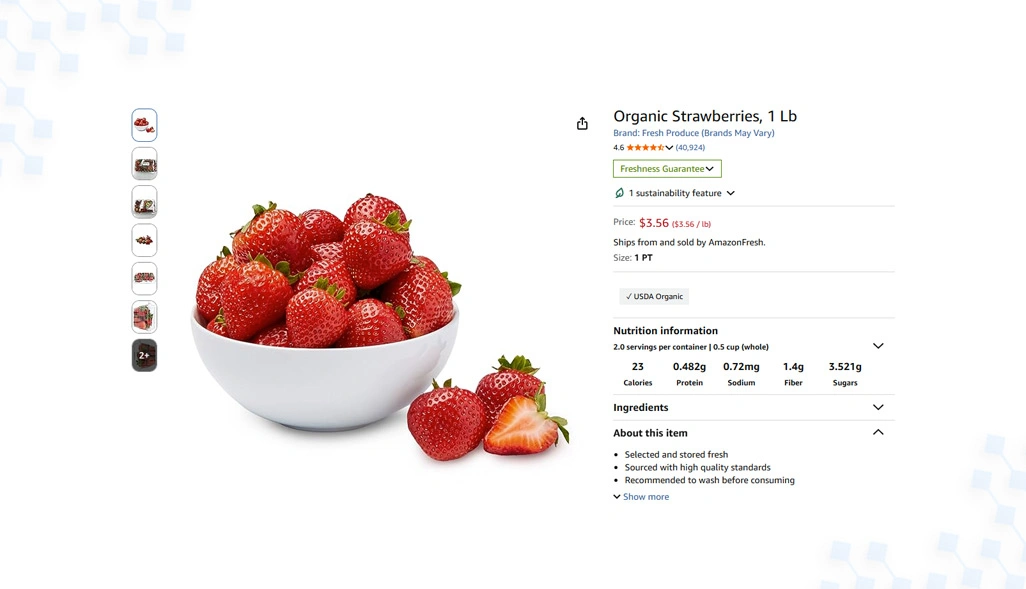
Product availability has a direct impact on customer satisfaction, basket value, and repeat purchases in online grocery retail. When shoppers cannot find essential items, they may choose alternative brands, reduce their order size, or move to another delivery platform.
Regular monitoring helps businesses identify products that are available, temporarily unavailable, out of stock, or replaced with substitute items. These signals can support better inventory planning and help category teams prioritize products that experience recurring demand.
The Amazon Fresh Data Scraping Service provides structured product availability information that can be delivered through scheduled files, dashboards, APIs, or custom reporting formats. When availability data is combined with pricing and promotional information, teams can better understand whether a product is unavailable due to demand spikes, supply constraints, or assortment changes.
| Availability Signal | What It Indicates | Retail Action |
|---|---|---|
| In-stock status | Product is ready for purchase | Maintain supply readiness |
| Out-of-stock status | Possible supply or demand issue | Review replenishment plans |
| Alternative product listing | Platform suggests substitute products | Improve replacement options |
| Delivery availability | Product is available in selected areas | Analyze service coverage |
| Listing frequency changes | Possible assortment updates | Monitor category movement |
Retail studies show that consistent stock monitoring can reduce missed sales opportunities by helping businesses identify recurring product shortages earlier. Amazon Fresh Inventory Scraping for Monitoring helps retailers evaluate recurring stock gaps and improve decisions around replenishment, product visibility, and high-demand assortment planning.
Product-Level Analysis for Smarter Assortment Planning
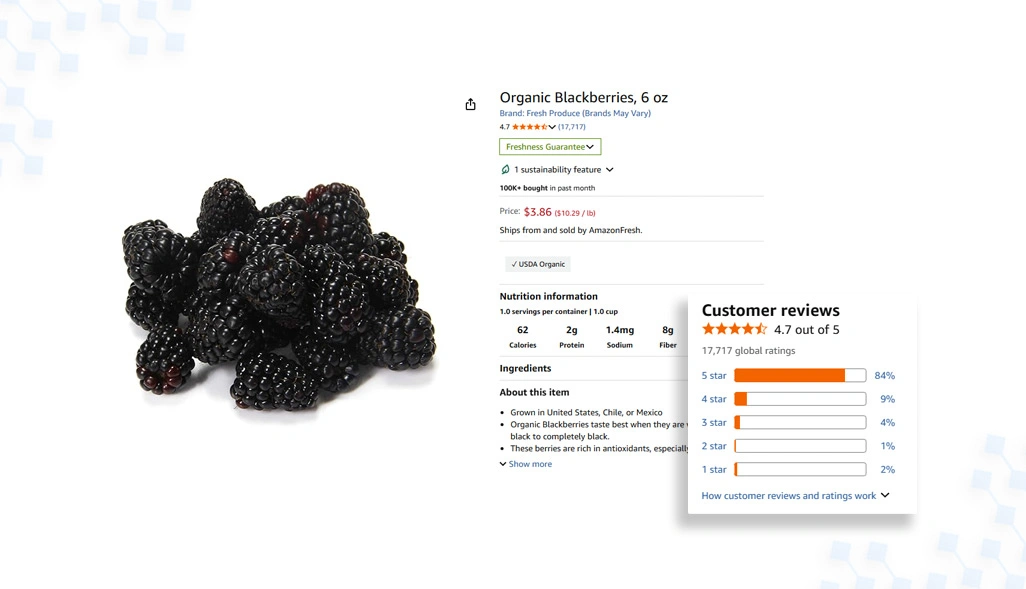
Successful grocery assortment planning depends on understanding more than price and stock status. Retailers must evaluate product categories, brands, pack sizes, ratings, promotional labels, and product variations to understand how competitors serve customer demand.
Structured datasets can simplify category research by organizing thousands of product listings into usable fields. Retail teams can filter information by category, brand, product type, price range, and availability status. This reduces the time required to review competitor catalogs manually and supports faster decisions around sourcing, merchandising, and category expansion.
The Amazon Fresh Quick Commerce Dataset helps businesses analyze product depth, brand coverage, category movement, and promotional placement across fast-delivery grocery listings. Retailers can compare their own catalog against competitor assortments and identify opportunities to introduce new pack sizes, private-label alternatives, or high-demand products.
| Product Attribute | Competitive Insight | Business Use |
|---|---|---|
| Product category | Shows category coverage | Supports assortment expansion |
| Brand name | Identifies leading brands | Improves brand strategy |
| Product size | Compares pack-size options | Supports product positioning |
| Ratings and reviews | Indicates shopper preference | Helps prioritize products |
| Promotional labels | Reveals campaign activity | Improves offer planning |
Digital retail research indicates that product-level assortment intelligence can reduce category review time while improving the accuracy of product planning decisions. SKU Data Extraction for Amazon Fresh supports detailed product comparison by helping retailers evaluate variations, identify catalog gaps, and plan assortments around changing shopper preferences.
How Web Data Crawler Can Help You?
Retail businesses need dependable data collection systems that can transform changing grocery listings into usable intelligence. Through Amazon Fresh Product Data Scraping, teams can collect relevant product details and convert them into reports that support pricing, inventory, and assortment decisions.
Our approach includes:
- Collect product listings from selected grocery categories
- Track pricing changes and promotional activity
- Monitor product availability across regular intervals
- Compare brands, pack sizes, and product variations
- Receive structured datasets in preferred formats
- Integrate collected data into internal analytics systems
Businesses can also use Web Scraping Grocery Data Using Amazon Fresh API to support ongoing market research with scalable and organized data delivery. The service can be customized based on category requirements, data frequency, target locations, and reporting needs.
Conclusion
Retailers can improve decision speed when they use Amazon Fresh Product Data Scraping to monitor pricing, availability, assortment changes, and product-level market signals. Regular data collection helps teams identify competitor movement earlier and build stronger strategies around grocery category performance.
Structured datasets also make it easier to Scrape Amazon Fresh Grocery Delivery Data for analyzing delivery-focused product listings, customer-facing offers, and changing market patterns. Contact Web Data Crawler today to build a customized grocery intelligence solution for your retail business.