


Why Is Amazon Fresh Grocery Delivery Data Scraping for Insights Key to Smarter Grocery Pricing?
Sep 01, 2026
Introduction
Grocery businesses increasingly rely on structured marketplace data to understand changing prices, product availability, promotions, and delivery patterns. Amazon Fresh Grocery Data Scraping for Analysis helps transform scattered grocery information into organized insights that support pricing decisions, assortment planning, competitor evaluation, and demand forecasting across different locations and product categories.
Pricing decisions can change rapidly because grocery products experience frequent promotions, stock fluctuations, regional differences, and delivery variations. An Amazon Fresh Data Scraping Service can collect these signals consistently, helping businesses compare products, monitor pricing movements, evaluate availability, and identify patterns that influence customer purchasing behavior and operational planning.
With Amazon Fresh Grocery Delivery Data Scraping for Insights, businesses can build reliable datasets for monitoring grocery markets and evaluating pricing strategies. Combining product attributes, seller information, discounts, ratings, delivery details, and availability creates a broader market view that supports faster decisions and improves the accuracy of grocery intelligence initiatives.
Building Stronger Pricing Intelligence Through Grocery Data
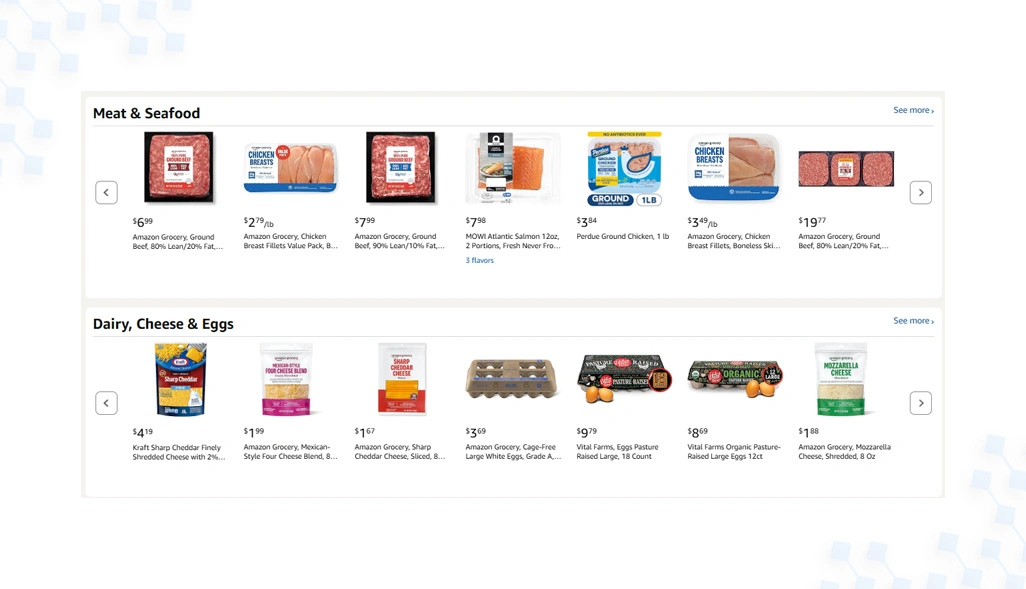
Grocery pricing changes rapidly because retailers frequently adjust prices according to promotions, demand, inventory conditions, product sizes, and regional market activity. Amazon Fresh Quick Commerce Dataset resources can organize product observations into structured records, making historical comparisons easier. Such datasets can help analysts evaluate pricing patterns across categories and locations while supporting more consistent competitive intelligence and assortment research.
A structured collection process can capture product names, brands, categories, pack information, listed prices, discounted prices, availability, ratings, and other relevant attributes. Amazon Fresh Product Data Scraping Service capabilities can help businesses gather these product-level details at recurring intervals. For example, monitoring 10,000 products each day can generate approximately 300,000 observations during a 30-day period, creating a substantial foundation for historical analysis and pricing comparisons.
- Tracking recurring price movements
- Comparing product-level pricing patterns
- Monitoring promotional changes
- Evaluating regional assortment differences
- Identifying frequently changing products
Businesses can use these observations to identify products experiencing repeated price changes, frequently applied discounts, or unusual regional variations. This supports more informed pricing decisions because analysts can compare current information with previously collected records. Consistent monitoring also helps merchandising teams recognize assortment changes and understand whether pricing movements correspond with availability or promotional activity across different grocery categories.
| Metric | Example |
|---|---|
| Product coverage | 10,000 SKUs |
| Daily observations | 10,000 |
| Monthly observations | 300,000 |
| Collection frequency | Daily |
| Analysis period | 30 days |
Improving Assortment Decisions With Availability Signals
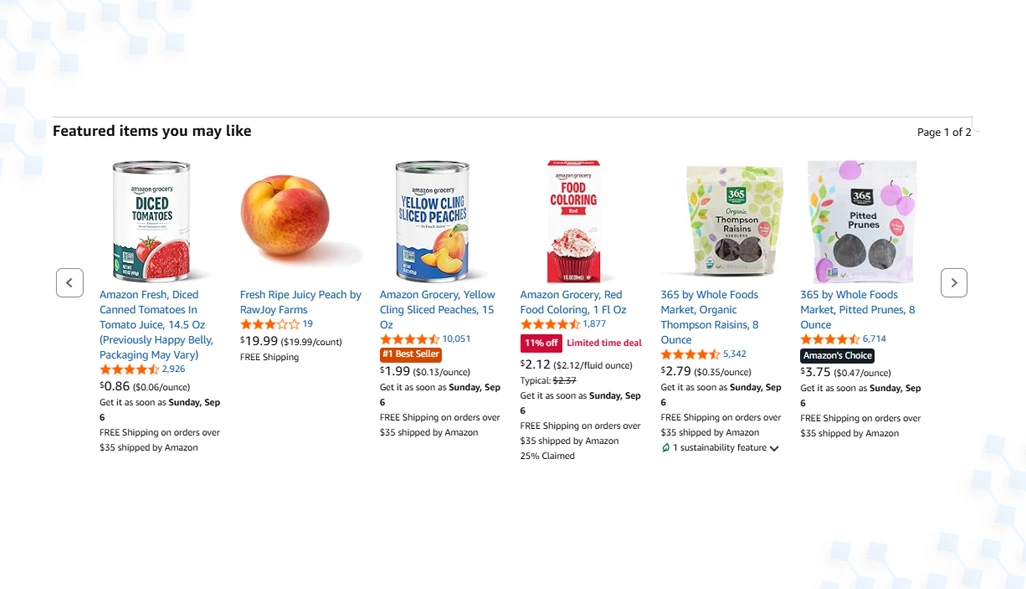
Product availability can significantly influence grocery pricing and customer purchasing behavior. When products frequently move in and out of stock, businesses may need to examine whether these changes correspond with pricing adjustments, promotions, or regional demand. Amazon Fresh Grocery Data Crawler solutions can automate recurring collection of product and availability information, helping analysts maintain consistent records.
Availability monitoring can include product status, variants, pack sizes, brands, ratings, discounts, and delivery-related information. These details provide additional context when businesses evaluate assortment performance. If 5,000 products are monitored across three locations, the resulting 15,000 location-product combinations can provide useful signals about regional differences. Repeated collection can further show which products remain consistently available and which experience frequent fluctuations.
- Monitoring stock availability
- Comparing regional assortment
- Identifying recurring stock fluctuations
- Evaluating product variants
- Supporting merchandising analysis
Businesses can analyze these observations to identify assortment gaps, recurring stock issues, and products with changing market conditions. Combining availability with pricing information allows analysts to assess whether price movements occur alongside inventory changes. This can support merchandising decisions, competitor comparisons, category-level planning, and better allocation of analytical resources toward products that show frequent changes or stronger market activity.
| Data Point | Business Purpose |
|---|---|
| Product availability | Stock monitoring |
| Product variant | Assortment evaluation |
| Brand | Category comparison |
| Discount | Promotion assessment |
| Rating | Customer evaluation |
Strengthening Delivery Intelligence For Smarter Grocery Strategies
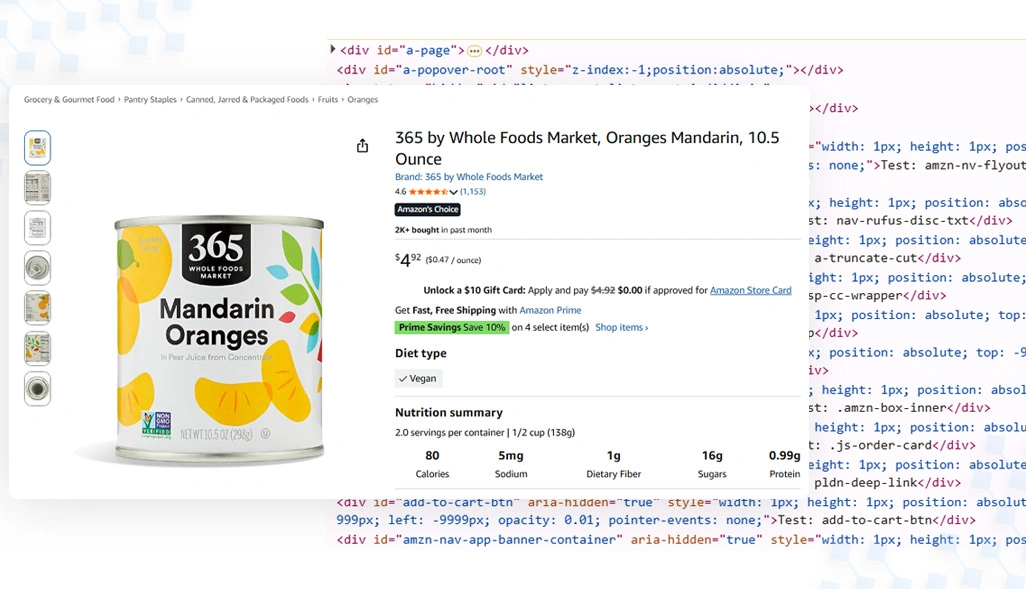
Delivery conditions provide valuable context when businesses evaluate grocery marketplace performance. Customers often consider convenience, serviceability, delivery windows, and product availability alongside prices. Amazon Fresh Grocery Data API integration can help businesses access structured information for analytical workflows and reporting environments. When delivery signals are reviewed together with product and pricing observations, analysts can build a more complete understanding of regional grocery market conditions.
Delivery-related information can help businesses compare service conditions between locations and identify differences in product availability or estimated delivery windows. For example, monitoring 2,500 products across four locations creates 10,000 location-product combinations during each collection cycle. Repeating this process can establish historical observations that help analysts recognize persistent regional differences and changing service patterns.
- Comparing delivery conditions
- Monitoring serviceability
- Evaluating regional differences
- Connecting delivery with availability
- Supporting market intelligence
Businesses can combine delivery observations with product attributes, prices, promotions, and availability to support broader market intelligence. Scrape Amazon Fresh Product Data API solutions can contribute structured product information to analytical workflows where businesses need recurring data for dashboards, comparisons, forecasting, or reporting. This broader dataset can help teams evaluate grocery conditions from multiple perspectives rather than focusing exclusively on pricing.
| Delivery Signal | Analytical Purpose |
|---|---|
| Delivery window | Service comparison |
| Location | Regional evaluation |
| Product price | Price benchmarking |
| Availability | Demand assessment |
| Promotion | Offer analysis |
How Web Data Crawler Can Help You?
Reliable grocery intelligence depends on collecting information consistently and organizing it into a format that businesses can analyze efficiently. We can support recurring collection of product, pricing, availability, promotional, and delivery-related information from grocery marketplaces. Amazon Fresh Grocery Delivery Data Scraping for Insights becomes more valuable when collection follows a consistent workflow covering extraction, validation, organization, and delivery.
The platform can help organizations establish a structured process that reduces repetitive manual monitoring and supports larger data volumes. It can also assist with data cleaning, normalization, duplicate handling, and organization so that collected records remain easier to use across analytical workflows.
Key capabilities include:
- Automated data collection
- Recurring marketplace monitoring
- Product-level data structuring
- Price and promotion tracking
- Location-based data collection
- Customized data delivery
Businesses can use these structured outputs for dashboards, internal databases, analytical models, forecasting systems, and market reports. Amazon Fresh Web Scraping Services can support organizations requiring scalable collection workflows and customized data requirements.
Conclusion
Smarter grocery pricing depends on accurate and consistently collected information covering products, prices, availability, promotions, and delivery conditions. Amazon Fresh Grocery Delivery Data Scraping for Insights can help businesses organize these changing marketplace signals into structured datasets for competitive evaluation, pricing analysis, assortment planning, and regional comparisons. Historical records can further help teams identify recurring patterns and make decisions using broader market evidence.
A systematic data collection workflow can improve research efficiency while providing information that is easier to integrate into business processes. Amazon Fresh Grocery Data Scraping for Analysis can strengthen these initiatives by providing organized information for deeper evaluation. Connect with Web Data Crawler today to build a customized grocery data solution for smarter pricing, market intelligence, and competitive analysis.