


How Does Airline Fare Monitoring Dataset Scraping for Insights Decode Real-Time Fare Fluctuations?
Sep 28
Introduction
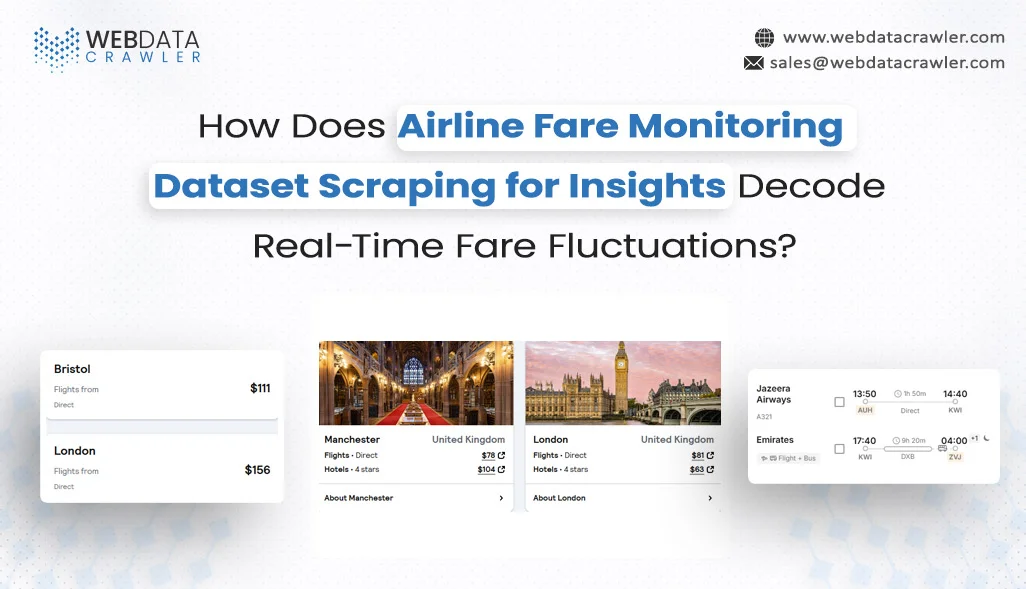
Airline fares can change multiple times within a single day based on demand, inventory, route popularity, seasonality, and competitive movements. Airline Fare Monitoring Dataset Scraping for Insights helps businesses collect structured fare information continuously, creating a clearer view of pricing behavior across airlines, routes, cabins, and travel dates.
Modern airfare intelligence requires more than occasional price checks. With Popular Travel Data Scraping, businesses can monitor fare movements across multiple markets while capturing departure times, ticket classes, baggage details, availability, and promotional changes. This creates historical datasets that support meaningful comparisons between changing market conditions.
Real-time monitoring also helps identify unusual price movements before they become difficult to interpret. By combining fare observations with route, schedule, demand, and competitor information, analysts can recognize recurring pricing patterns. These insights can support revenue planning, travel budgeting, competitive research, and automated fare intelligence across large airline networks.
Decoding Real-Time Fare Signals Across Complex Airline Routes
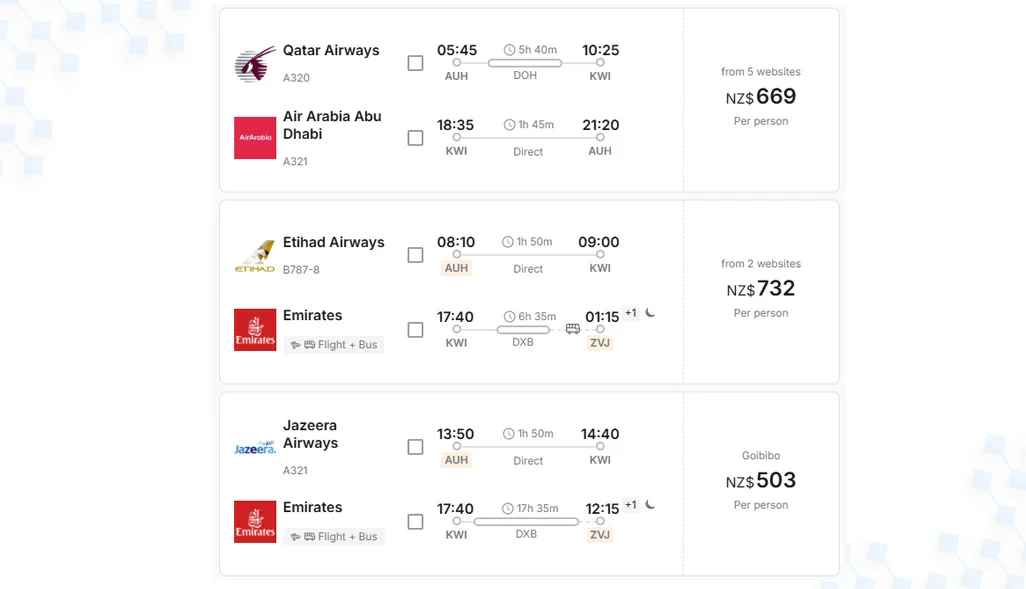
Airfare monitoring becomes more valuable when observations are collected consistently across routes, airlines, travel dates, and booking windows. Airline Ticket Price Tracking Scraping can organize fare changes according to origin, destination, cabin, availability, and departure schedules. This structured approach makes it easier to compare multiple observations instead of relying on isolated fare checks collected manually at different times.
It also provides a stronger foundation for identifying recurring pricing movements across popular and less-traveled routes. A reliable collection workflow can record fares at predefined intervals throughout the day, creating a time-based history of market changes.
For example, monitoring 100 routes four times daily produces 400 route-level observations each day before considering different airlines, cabins, or fare categories. Web Scraping Travel Data can add supporting attributes such as travel dates, flight duration, stopover details, baggage information, and availability, giving analysts additional context when interpreting fare changes across different markets.
Several important monitoring elements can be incorporated into a structured workflow:
- Route and destination-level fare collection
- Airline and cabin-class identification
- Departure date and schedule tracking
- Availability and fare-category monitoring
- Repeated observations at defined intervals
- Historical storage for trend analysis
| Monitoring Factor | Example Coverage | Observation Value |
|---|---|---|
| Routes | 100 | Route comparison |
| Daily checks | 4 | Intraday movement |
| Airlines | 8 | Competitive visibility |
| Cabin classes | 3 | Fare segmentation |
| Booking windows | 30 days | Advance-purchase analysis |
Over time, repeated observations can reveal whether fares remain relatively stable or experience frequent adjustments. Analysts can compare minimum, maximum, average, and median values across selected periods. This helps separate ordinary fluctuations from more noticeable movements and supports deeper examination of pricing behavior around weekends, holidays, high-demand periods, and changes in seat availability.
Mapping Historical Fare Movements Through Key Market Signals
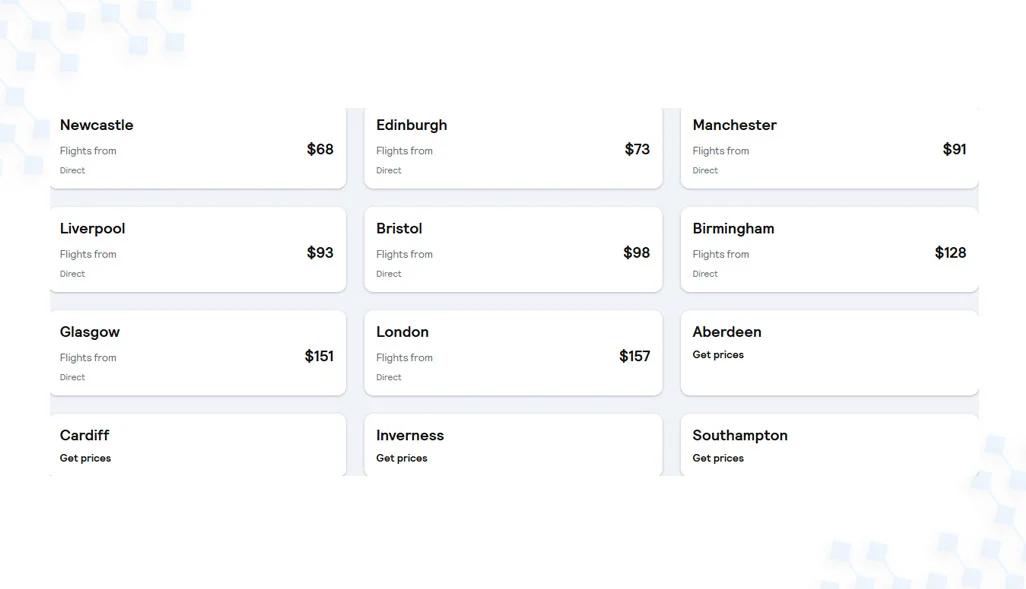
Historical airfare records become considerably more useful when they are connected with measurable variables. An Airline Dynamic Pricing Analytics Dataset can organize ticket prices alongside travel dates, booking windows, route characteristics, cabin categories, and availability. These structured records can then be compared with relevant Travel Datasets to provide broader market context and help analysts understand why particular fare movements appeared during specific periods or across selected routes.
Consider a monitoring environment that collects 2,000 fare observations across 60 days. Analysts can divide the information by weekday, departure period, airline, cabin, and advance-booking window to identify recurring differences. A sharp increase might appear alongside reduced availability, while lower prices could repeatedly occur during periods with fewer booking pressures.
Key dataset components can include:
- Historical ticket price observations
- Booking-window segmentation
- Route and airline identification
- Travel-date classification
- Cabin and fare-category details
- Availability status and changes
| Dataset Variable | Sample Records | Analytical Purpose |
|---|---|---|
| Fare observations | 2,000 | Price movement |
| Routes | 50 | Market comparison |
| Travel dates | 60 days | Seasonality |
| Booking windows | 7–60 days | Advance pricing |
| Availability status | 4 levels | Inventory context |
Once historical observations are organized, businesses can compare price behavior across different periods and market conditions. This can reveal repeated patterns that may otherwise remain hidden in individual fare checks. Analysts can examine average movement, price ranges, frequency of adjustments, and differences between travel periods to build a more consistent interpretation of changing airfare conditions.
Tracing Competitive Price Shifts Across Dynamic Fare Markets
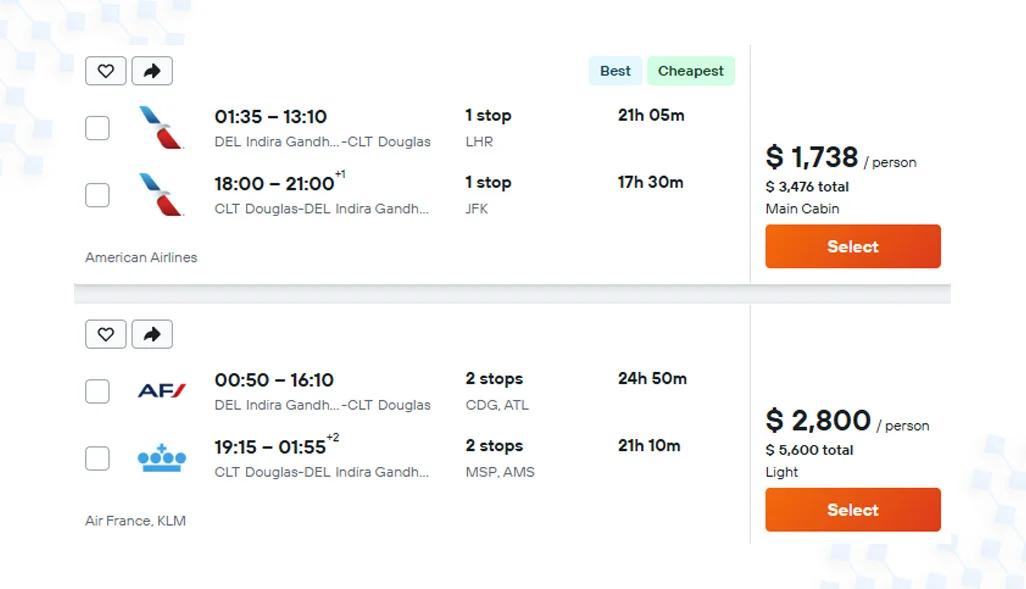
Airline pricing becomes more complex when multiple carriers adjust fares independently throughout the day. Airline Pricing Trends Analytics Scraping can organize these movements according to airline, route, cabin, departure date, and observed fare, allowing analysts to compare competitive changes within a common structure. This creates a clearer foundation for studying repeated adjustments, pricing gaps, and changing market conditions across selected airline markets.
A monitoring system covering 75 routes and six airlines could generate thousands of comparable observations every week. Analysts can calculate minimum and maximum fares, median prices, average movements, adjustment frequency, and differences between competing carriers. A Scraping API can also help transfer refreshed observations into dashboards, databases, or analytical pipelines, reducing the need for repeated manual collection and improving access to updated records.
A competitive monitoring workflow can focus on several useful indicators:
- Airline-to-airline fare comparisons
- Route-level pricing differences
- Minimum and maximum fare tracking
- Frequency of observed price adjustments
- Cabin-level competitive analysis
- Availability-related pricing changes
| Metric | Example Monitoring Level | Insight |
|---|---|---|
| Routes | 75 | Market coverage |
| Airlines | 6 | Competition |
| Weekly observations | 3,000+ | Fare movement |
| Price range | Min–Max | Volatility |
| Change frequency | Hourly–Daily | Adjustment patterns |
Over longer monitoring periods, competitive records can create a detailed timeline of airfare movements. Teams can use these timelines to identify periods of increased volatility, recurring fare differences, and changes in competitive positioning. Combining frequent observations with structured analytical metrics makes large airfare datasets easier to interpret and supports more systematic research into dynamic pricing environments.
How Web Data Crawler Can Help You?
Airline fare monitoring requires consistent collection, structured processing, and reliable delivery of changing information. We can support Airline Fare Monitoring Dataset Scraping for Insights by organizing fare observations from multiple airline and travel sources into usable datasets. The workflow can capture pricing, availability, route details, schedules, cabin information, and other relevant attributes according to defined requirements.
Key capabilities can include:
- Automated collection across selected airline and travel sources
- Structured extraction of fares, routes, schedules, and availability
- Regular monitoring for newly changed pricing information
- Historical storage for trend and comparison analysis
- Data cleaning and normalization across different formats
- Delivery of organized datasets for analytics and reporting
With a structured collection framework, businesses can also establish consistent monitoring schedules and organize historical records for future comparisons. In the final stage, Airline Fare Tracking API Dataset integration can help connect refreshed fare records with internal applications, dashboards, databases, and analytical systems for streamlined access.
Conclusion
Airline fare markets generate continuous changes that can be difficult to interpret through occasional manual checks. Airline Fare Monitoring Dataset Scraping for Insights brings repeated observations into a structured framework, allowing businesses to compare routes, airlines, booking windows, availability, and historical movements more consistently. This organized information can support pricing research, travel planning, market analysis, and competitive monitoring.
Understanding How Airline Dynamic Pricing Really Works becomes more practical when supported by continuously collected evidence rather than isolated fare snapshots. A well-designed monitoring workflow can transform changing ticket prices into useful datasets for deeper analysis and reporting. Contact Web Data Crawler today to build a structured airline fare monitoring solution tailored to your data requirements.