
How Adidas Product Pricing Data Scraping for Competitive Analysis Supports Catalog, Pricing Analysis?
Oct 09
Introduction
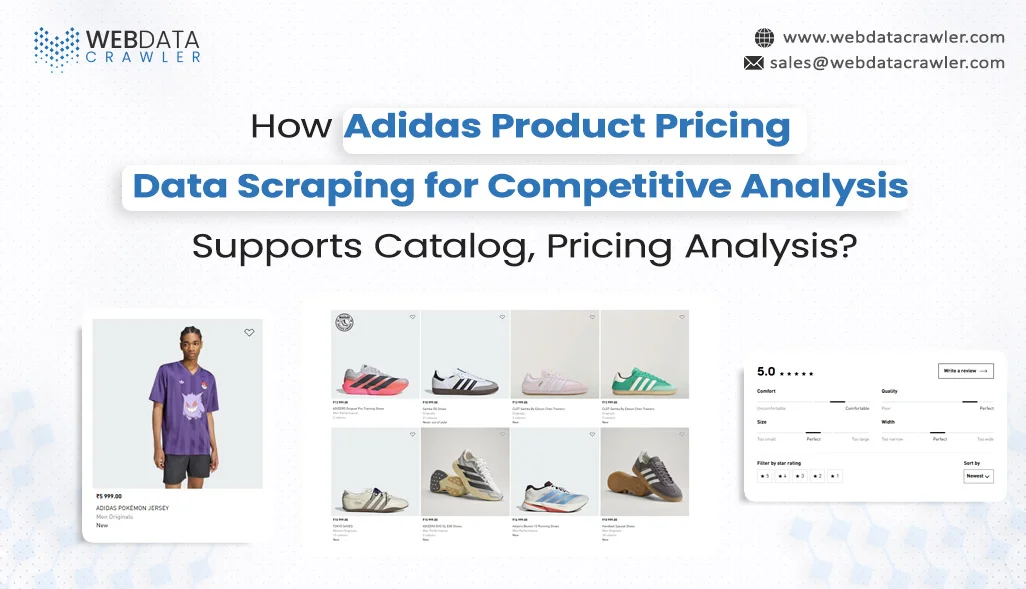
Adidas operates across numerous product categories, regions, and customer segments, creating a large volume of product information that changes regularly. Adidas Product Pricing Data Scraping for Competitive Analysis helps businesses organize product names, prices, discounts, SKUs, sizes, colors, and availability into structured information for evaluating competitive retail conditions and catalog movements.
Competitive research becomes more effective when product information is collected consistently across digital channels. Scraping Adidas Product SKUs With Availability Tracking can help businesses identify product-level availability changes, compare pricing differences, evaluate similar offerings, and understand catalog movements without depending entirely on fragmented manual research.
Historical product information can provide additional value by showing how prices, promotions, stock conditions, and assortment details change over time. A structured collection process creates useful records for identifying recurring pricing patterns, inventory movements, product additions, discontinued listings, and competitive positioning across different markets and retail channels.
Structured Catalog Intelligence Improves Adidas Product Comparisons
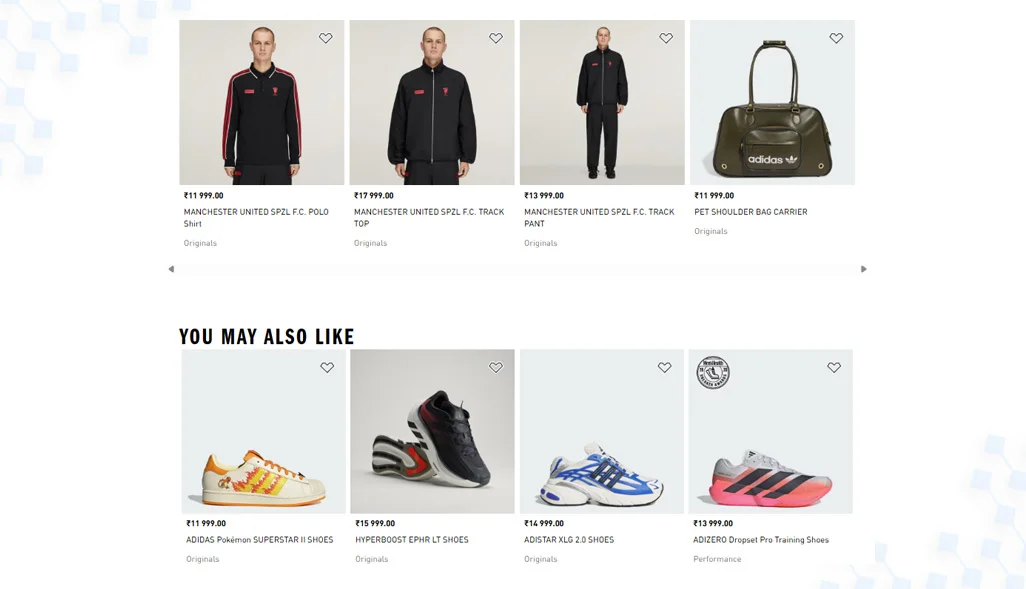
A well-organized catalog provides retailers with a detailed view of products, categories, SKUs, sizes, colors, prices, discounts, and availability. By using Scrape Adidas Product Listings and Pricing Data workflows, businesses can bring scattered product information into structured datasets that are easier to compare and analyze. This approach can reduce repetitive manual collection while creating consistent records for product-level research.
Product information also becomes more useful when it is collected according to defined attributes. An Adidas Product Dataset for Pricing Analysis can combine product identifiers, category information, pricing fields, promotional details, and availability indicators within a consistent structure. This makes it easier for analysts to compare product groups and identify differences across markets, channels, and time periods.
Mobile shopping environments can contain valuable product information that complements web-based observations. With Mobile App Scraping, businesses can collect relevant information from supported digital applications and compare product details across shopping environments. This broader coverage can help identify differences in product availability, pricing presentation, assortment depth, and promotional visibility.
| Catalog Element | Analytical Purpose |
|---|---|
| Product Category | Assortment comparison |
| Product Name | Product identification |
| SKU | Individual item tracking |
| Size | Variant comparison |
| Color | Variant classification |
| Availability | Stock evaluation |
Key benefits include:
- Consistent product attribute organization
- Easier product-to-product comparisons
- Recurring catalog change tracking
- Better visibility into assortment movements
- Reduced dependence on manual research
- Structured information for retail analysis
A structured catalog workflow can also support recurring competitive research. Teams can track newly listed products, changes to existing SKUs, removed products, and assortment expansion while maintaining historical records for future comparison. This creates a clearer foundation for category analysis and helps businesses understand how product portfolios evolve across digital retail channels.
Historical Pricing Patterns Support Better Retail Planning
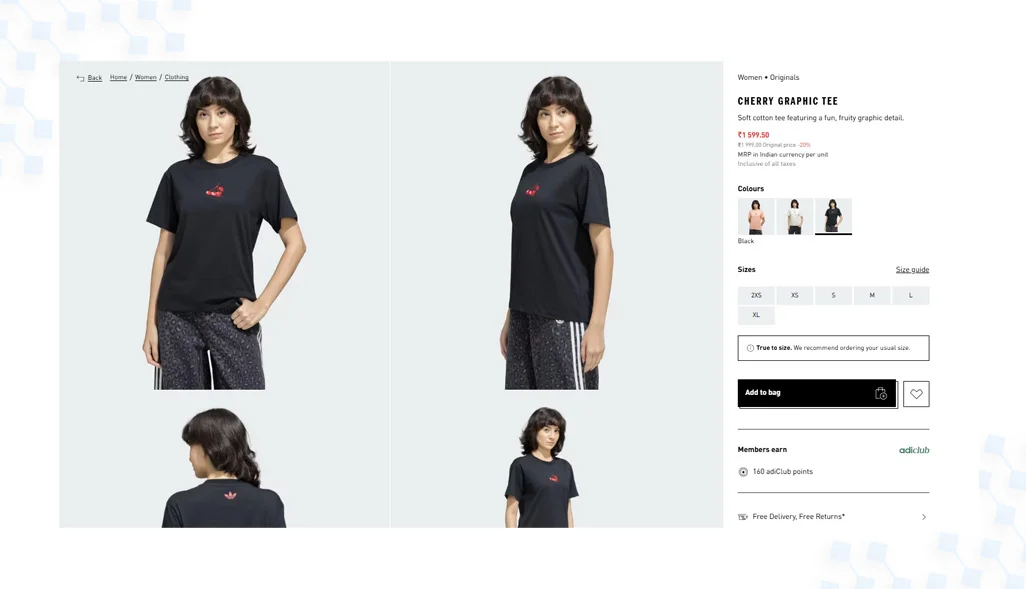
Pricing information becomes considerably more valuable when businesses maintain historical records instead of examining isolated price observations. Web Scraping Adidas Product Prices and Stock Availability can help combine price information with stock conditions, discounts, and product identifiers. These records allow analysts to examine how products behave across different periods and promotional cycles.
Pricing datasets can reveal differences between standard prices and promotional offers across product categories. Businesses can examine which products receive discounts, how frequently prices change, and whether particular categories show stronger promotional activity. Such information provides a practical reference for evaluating market positioning and developing more informed pricing strategies.
Regular observations can also support Dynamic Pricing Optimization by giving pricing teams access to historical market signals. Instead of relying only on current competitor prices, analysts can evaluate previous movements, promotional periods, and product-level changes. This can help establish more informed pricing benchmarks while supporting decisions around discounts, product positioning, and category-level strategies.
| Pricing Attribute | Business Application |
|---|---|
| Listed Price | Market benchmarking |
| Sale Price | Promotion evaluation |
| Discount | Offer comparison |
| Price Change | Trend identification |
| Product Category | Category analysis |
| Historical Value | Pattern assessment |
Key advantages include:
- Better historical pricing visibility
- More consistent promotional analysis
- Improved category-level benchmarking
- Stronger pricing trend evaluation
- Better connection between price and stock
- More informed retail planning
Pricing analysis becomes stronger when SKU-level information is connected with inventory conditions. Businesses can evaluate whether price changes coincide with availability changes, promotional campaigns, or shifts in assortment. This combined perspective can help separate temporary promotional movements from broader pricing patterns and provide a stronger foundation for retail planning.
Availability Signals Enhance Competitive Market Assessment
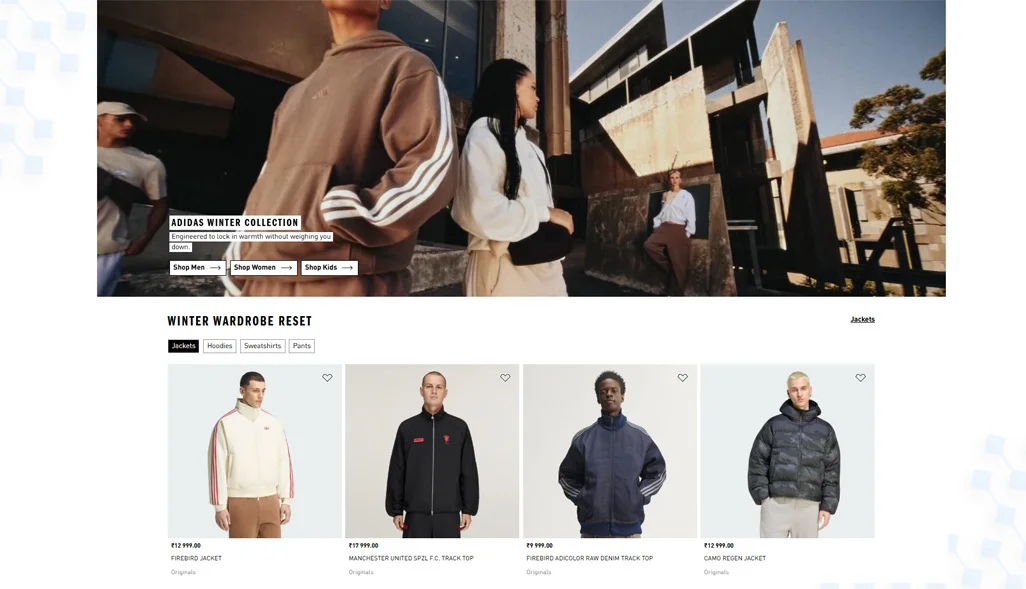
Price comparisons provide only part of the information required for effective competitive assessment. Inventory conditions can indicate whether a product remains available, becomes limited, or disappears from a catalog. By using Scrape Adidas SKU Data for Pricing and Inventory Analysis, businesses can examine individual product identifiers alongside pricing and inventory-related attributes to develop a more complete view of market activity.
Product availability can change rapidly because of demand, promotions, seasonal cycles, and inventory movement. Tracking these changes allows analysts to identify products that remain consistently available and those that experience recurring stock interruptions. These observations can provide additional context when evaluating price movements and product performance across different categories.
Integrating structured product information through an Adidas Product Catalog Data Extraction API can also support recurring data workflows. Businesses can connect relevant catalog information with internal systems, dashboards, or analytical environments instead of repeatedly collecting and organizing information manually. This can improve consistency when large product catalogs require ongoing monitoring.
| Market Signal | Analytical Value |
|---|---|
| In Stock | Availability assessment |
| Out of Stock | Inventory signal |
| Limited Stock | Supply indication |
| Discounted | Promotional evaluation |
| New Listing | Assortment expansion |
| Removed Listing | Catalog movement |
Key applications include:
- SKU-level inventory assessment
- Product availability comparisons
- Competitive pricing evaluation
- Catalog movement identification
- Historical market trend analysis
- Recurring retail intelligence
Competitive research becomes more meaningful when pricing, assortment, and inventory signals are evaluated together. Competitor Price Monitoring can help teams compare product-level pricing activity while availability information provides additional context around those movements. Historical records can then support comparisons between categories, markets, and different observation periods.
How Web Data Crawler Can Help You?
For businesses managing large product catalogs, Adidas Product Pricing Data Scraping for Competitive Analysis can provide a structured approach to collecting product, pricing, SKU, and availability information from relevant digital sources. We can organize collected information according to business requirements, helping teams work with consistent records for competitive research, catalog evaluation, pricing analysis, and inventory-related assessment.
The solution can support recurring collection workflows designed around specific product attributes and market requirements. Businesses can define the fields they need, establish suitable collection frequencies, and receive structured information that can be incorporated into existing analytical processes.
Key capabilities include:
- Automated collection of product information
- Structured organization of retail attributes
- Recurring collection for market analysis
- Product-level pricing and availability tracking
- Scalable workflows for large catalogs
- Flexible data delivery for business use
The collected information can be prepared for analytical environments and integrated into existing workflows. Businesses can also use Adidas Product Data API for Competitive Analysis to connect structured product intelligence with internal applications, dashboards, pricing systems, and recurring research processes.
Conclusion
Consistent product information helps businesses evaluate assortment changes, pricing movements, discounts, availability, and competitive positioning across digital retail environments. Adidas Product Pricing Data Scraping for Competitive Analysis can organize these signals into structured information that supports recurring catalog research, historical comparisons, and product-level pricing evaluation.
A structured workflow can further simplify how SKU and catalog information is incorporated into business systems. Adidas Product Data API for Competitive Analysis can help connect relevant product intelligence with analytical workflows and internal platforms, making recurring competitive research more manageable and consistent. Contact Web Data Crawler to build a customized Adidas product, pricing, catalog, and inventory data solution for your competitive analysis requirements.